

Hey there! As a supplier of grinding beads, I often get asked if our grinding beads can be used for grinding nanomaterials. Well, let's dive right into this topic and find out.
First off, what are nanomaterials? Nanomaterials are materials with at least one dimension in the nanoscale range, typically between 1 and 100 nanometers. These materials have unique properties due to their small size, such as high surface area to volume ratio, quantum confinement effects, and enhanced reactivity. Because of these special properties, nanomaterials are used in a wide range of applications, including electronics, medicine, energy, and environmental science.
Now, let's talk about grinding beads. Grinding beads are small spherical particles made from various materials, such as zirconia, alumina, and glass. They are used in a process called bead milling, which is a common method for reducing the particle size of materials. In bead milling, the grinding beads are placed in a chamber along with the material to be ground, and the chamber is then agitated to cause the beads to collide with the material, breaking it down into smaller particles.
So, can grinding beads be used for grinding nanomaterials? The answer is yes, but there are some important factors to consider.
Material of the Grinding Beads
The material of the grinding beads is crucial when it comes to grinding nanomaterials. The grinding beads need to be hard enough to break down the nanomaterials, but also wear-resistant to prevent contamination.
- Cerium Stabilized Zirconia Beads: These beads are a popular choice for grinding nanomaterials. They have high hardness and excellent wear resistance, which means they can effectively grind nanomaterials without introducing a lot of impurities. You can find more information about Cerium Stabilized Zirconia Beads.
- 65 Zirconium Silicate Beads: These beads also offer good grinding performance. They are relatively hard and have a lower cost compared to some other types of beads. Check out 65 Zirconium Silicate Beads for more details.
- Zirconia Toughened Alumina Beads Of 4.0 True Density: These beads combine the properties of zirconia and alumina, providing a good balance between hardness and toughness. For more on these beads, visit Zirconia Toughened Alumina Beads Of 4.0 True Density.
Size of the Grinding Beads
The size of the grinding beads is another important factor. For grinding nanomaterials, smaller beads are generally preferred. Smaller beads can provide more contact points with the nanomaterials, which leads to more efficient grinding. However, if the beads are too small, they may be difficult to separate from the ground nanomaterials. A common size range for grinding nanomaterials is between 0.1 and 1 mm.
Milling Conditions
The milling conditions, such as the speed of agitation, the filling ratio of the beads, and the temperature, also play a significant role in the grinding process.
- Agitation Speed: A higher agitation speed can increase the collision frequency between the beads and the nanomaterials, leading to faster grinding. However, too high a speed can also generate a lot of heat, which may damage the nanomaterials or cause the beads to wear out more quickly.
- Filling Ratio: The filling ratio of the beads refers to the volume of the beads in the milling chamber. A proper filling ratio is necessary to ensure efficient grinding. If the filling ratio is too low, there may not be enough beads to collide with the nanomaterials. If it is too high, the beads may not be able to move freely, reducing the grinding efficiency.
- Temperature: The temperature during the grinding process needs to be controlled. High temperatures can cause the nanomaterials to agglomerate or change their properties. Cooling systems are often used to maintain a suitable temperature.
Advantages of Using Grinding Beads for Grinding Nanomaterials
- Uniform Particle Size Distribution: Grinding beads can help achieve a more uniform particle size distribution of the nanomaterials. This is important because the properties of nanomaterials are highly dependent on their particle size. A uniform particle size distribution can ensure consistent performance of the nanomaterials in various applications.
- High Efficiency: Bead milling with grinding beads is a relatively fast and efficient method for grinding nanomaterials. Compared to some other methods, such as ball milling, bead milling can achieve a smaller particle size in a shorter time.
- Scalability: The bead milling process using grinding beads can be easily scaled up for industrial production. This makes it a practical choice for large-scale manufacturing of nanomaterials.
Challenges and Limitations
- Contamination: Although wear-resistant grinding beads are used, there is still a risk of contamination during the grinding process. The beads may wear out over time, and the worn material can mix with the nanomaterials. This can affect the purity and properties of the nanomaterials.
- Agglomeration: Nanomaterials have a strong tendency to agglomerate due to their high surface energy. During the grinding process, the nanomaterials may agglomerate again, even after being broken down. Special dispersants or surfactants may need to be added to prevent agglomeration.
In conclusion, grinding beads can definitely be used for grinding nanomaterials, but careful consideration of the bead material, size, and milling conditions is necessary. At our company, we offer a variety of high-quality grinding beads that are suitable for grinding nanomaterials. Whether you are a researcher in a laboratory or a manufacturer in an industrial setting, we can provide you with the right grinding beads to meet your needs.

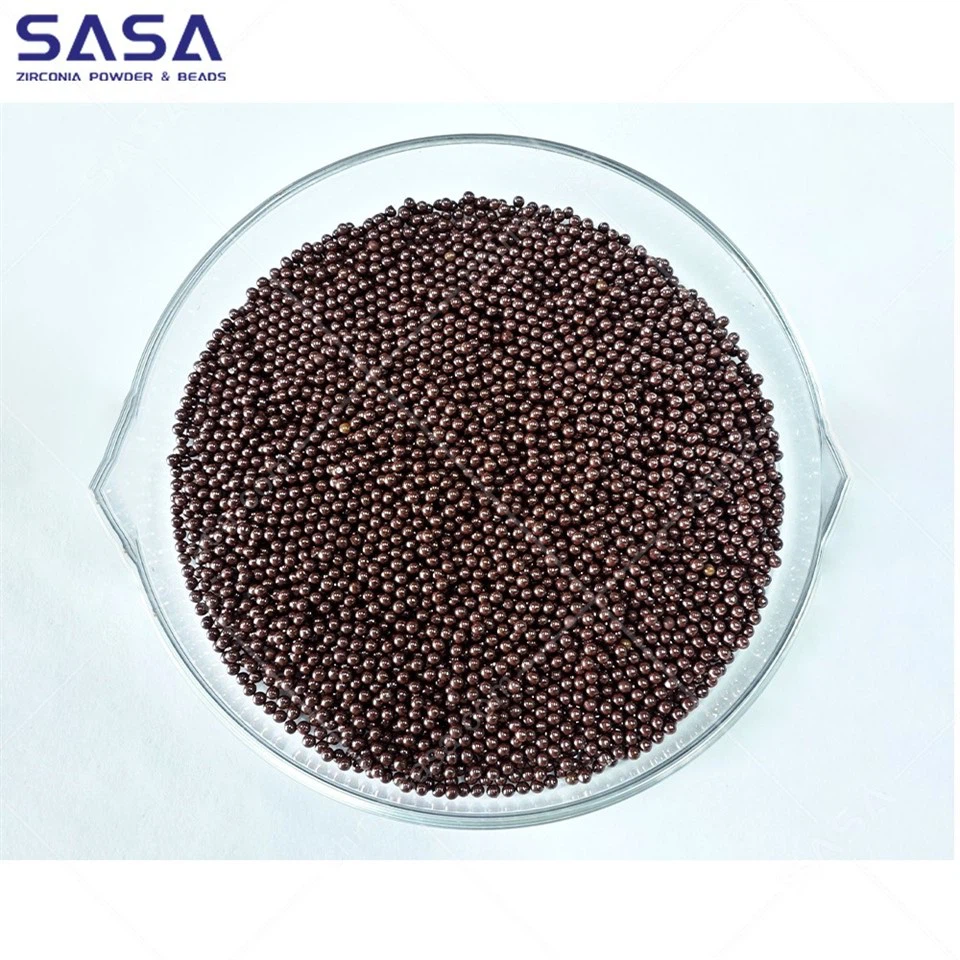
If you are interested in purchasing our grinding beads or have any questions about using them for grinding nanomaterials, feel free to reach out to us for a procurement discussion. We are more than happy to help you find the best solution for your grinding requirements.
References
- "Nanomaterials: Properties, applications, and toxicities" by X. Zhang, Y. Chen, and X. Wang.
- "Bead Milling: A Versatile Technique for Particle Size Reduction" by J. Smith.
- "Advances in Nanomaterial Processing" edited by L. Brown.