

As a supplier of Compound Zirconia Powder, I understand the importance of sustainable practices in the industry. Recycling Compound Zirconia Powder not only helps in conserving resources but also reduces environmental impact. In this blog, I'll share some effective ways to recycle this valuable material.
Understanding Compound Zirconia Powder
Compound Zirconia Powder is a versatile material used in various industries such as ceramics, electronics, and aerospace. It offers excellent mechanical properties, high thermal stability, and chemical resistance. However, the production of this powder requires significant energy and raw materials. Recycling it can help in minimizing the need for virgin materials and the associated environmental costs.
Collection and Sorting
The first step in recycling Compound Zirconia Powder is to collect the used or waste powder. This can be sourced from manufacturing processes, research laboratories, or end - of - life products. As a supplier, we can collaborate with our customers to establish a collection system. We can provide collection containers and arrange for regular pick - ups.
Once the powder is collected, it needs to be sorted. Different types of contaminants may be present in the waste powder, such as other metal oxides, organic residues, or abrasive particles. Sorting can be done using physical methods like sieving to separate particles based on size. Magnetic separation can also be employed to remove any ferrous contaminants. This pre - treatment step is crucial as it ensures that the recycled powder meets the required quality standards.
Chemical Processing
After sorting, chemical processing is often required to purify the Compound Zirconia Powder. One common method is acid leaching. In this process, the powder is treated with an appropriate acid, such as hydrochloric acid or sulfuric acid. The acid reacts with the impurities, dissolving them while leaving the zirconia intact. The solution is then filtered to separate the purified zirconia powder from the dissolved impurities.
Another chemical process is calcination. After acid leaching, the powder is calcined at high temperatures. Calcination helps in removing any remaining organic matter and in crystallizing the zirconia into the desired phase. The temperature and duration of calcination need to be carefully controlled to achieve the optimal properties of the recycled powder.
Re - manufacturing
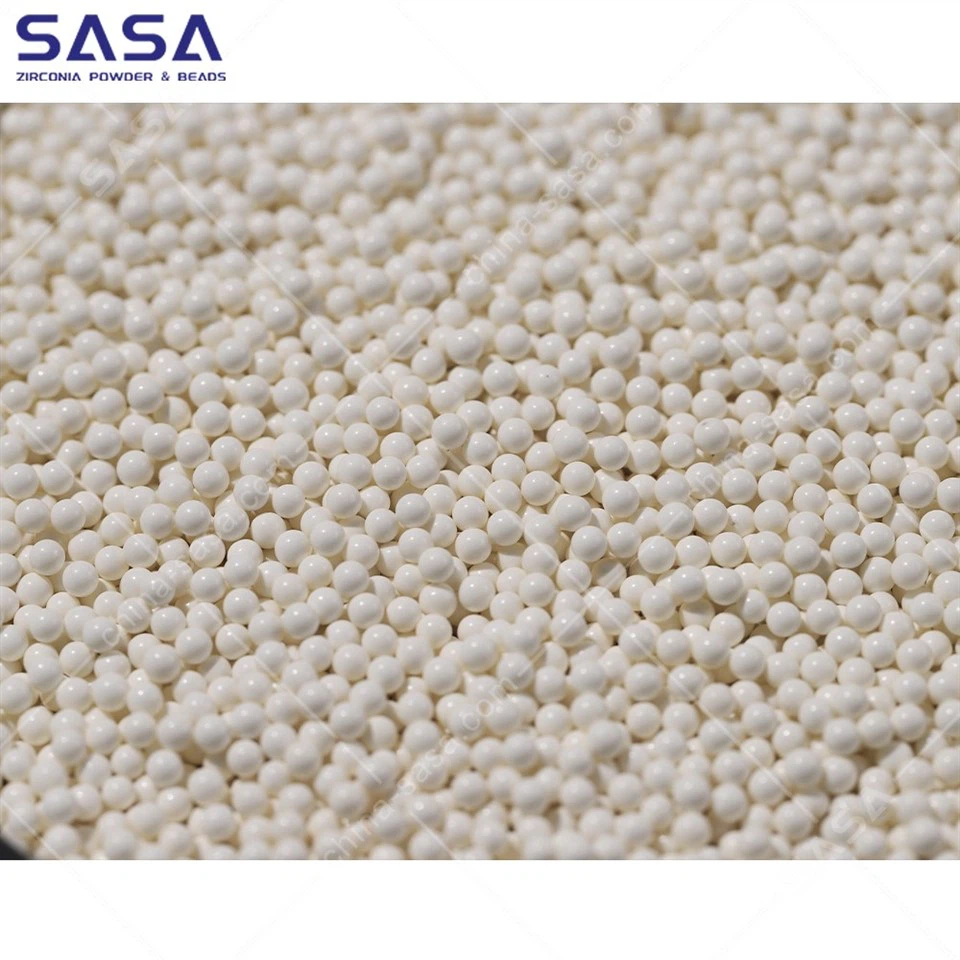
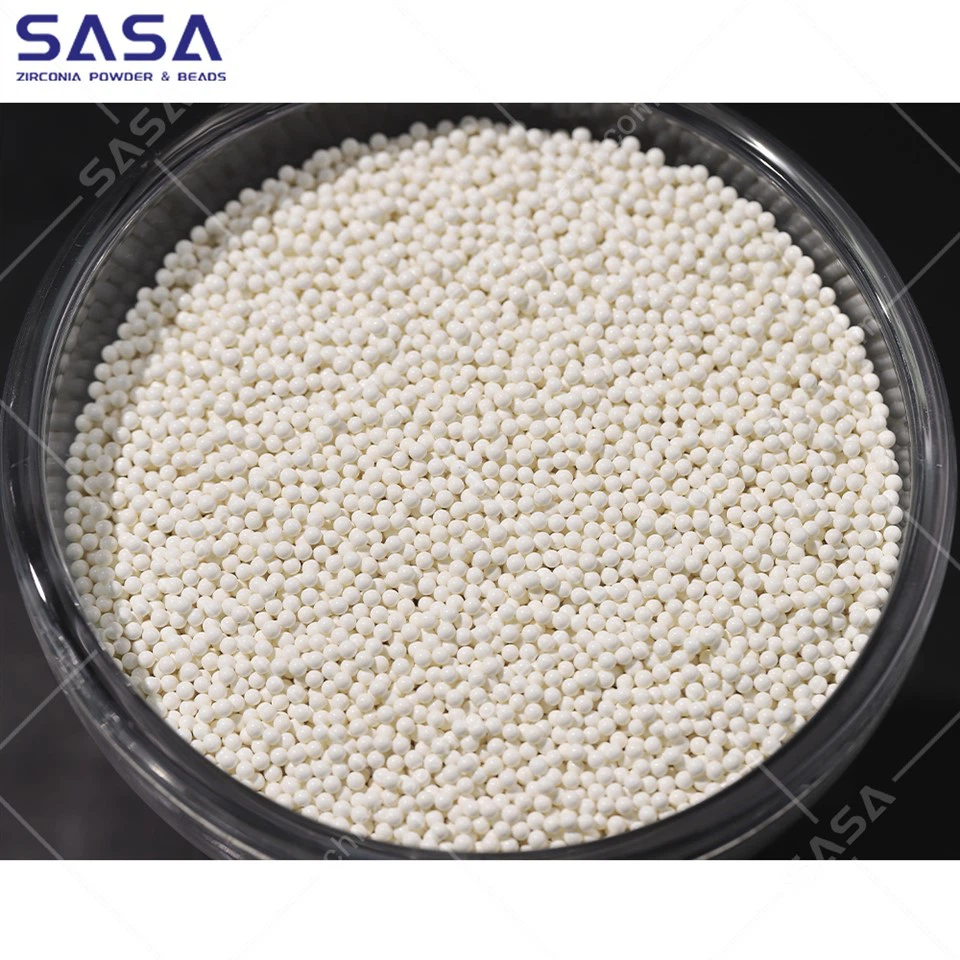
Once the Compound Zirconia Powder is purified, it can be re - manufactured into new products. For example, it can be used to produce Zirconium Silicate Sandblasting Beads. These beads are widely used in surface finishing applications, such as cleaning, deburring, and texturing of metal, ceramic, and plastic surfaces. The recycled powder can also be used to make 80 Zirconia Beads, which are commonly used in grinding and milling operations in the ceramics and paint industries.
In addition, the recycled powder can be used to produce 64 Zirconium Silicate Powder, which has applications in the production of refractory materials, ceramics, and glass. By re - manufacturing the recycled powder into these products, we can close the loop in the material life cycle and reduce the demand for newly mined zirconium resources.
Quality Control
Throughout the recycling process, quality control is essential. The recycled Compound Zirconia Powder needs to meet the same quality standards as the virgin powder. Various analytical techniques can be used for quality control. X - ray diffraction (XRD) can be used to determine the crystal structure of the powder. Scanning electron microscopy (SEM) can provide information about the particle size and morphology. Chemical analysis, such as inductively coupled plasma - mass spectrometry (ICP - MS), can be used to measure the elemental composition of the powder and ensure that the impurity levels are within the acceptable range.
Economic and Environmental Benefits
Recycling Compound Zirconia Powder offers significant economic and environmental benefits. From an economic perspective, it reduces the cost of raw materials. Since the recycling process is generally less energy - intensive than the production of virgin powder, it also leads to cost savings in terms of energy consumption. Additionally, by offering recycled products, we can attract environmentally - conscious customers and gain a competitive edge in the market.
From an environmental point of view, recycling reduces the demand for mining. Zirconium mining can have a significant impact on the environment, including deforestation, soil erosion, and water pollution. Recycling also reduces the amount of waste going to landfills, which helps in conserving landfill space and reducing the associated environmental risks.
Collaboration and Innovation
To further improve the recycling process of Compound Zirconia Powder, collaboration is key. We can collaborate with research institutions to develop new and more efficient recycling technologies. For example, researchers may be able to find new chemical processes that are more environmentally friendly or develop novel separation techniques.
Innovation in product design can also play a role. By designing products in a way that makes them easier to disassemble and recycle, we can increase the recyclability of Compound Zirconia Powder. For instance, using modular designs in products that contain zirconia components can simplify the disassembly process and improve the recovery rate of the powder.
Conclusion
Recycling Compound Zirconia Powder is a complex but rewarding process. As a supplier, we have a responsibility to promote sustainable practices in the industry. By establishing effective collection systems, using appropriate chemical processing methods, and ensuring strict quality control, we can produce high - quality recycled powder. This recycled powder can be used to manufacture a wide range of products, offering both economic and environmental benefits.
If you are interested in learning more about our recycled Compound Zirconia Powder or would like to discuss potential procurement opportunities, please feel free to reach out. We are always eager to engage in meaningful discussions with our customers and partners to promote a more sustainable future in the zirconia industry.
References
- Gupta, C. K., & Krishnamurthy, N. (2005). Extractive Metallurgy of Rare Earths. CRC Press.
- Roos, P. H., & Stevels, A. (2002). Product design and environmental impact: A life - cycle approach. Springer.
- Zhang, Y., & Li, J. (2018). Recycling of zirconium from waste materials: A review. Journal of Cleaner Production, 172, 4093 - 4102.