

Zirconium sulfate powder is a crucial chemical compound with a wide range of applications, from the production of zirconium compounds to use in the textile and leather industries. As a supplier of zirconium sulfate powder, understanding its stability at high temperatures is essential for both our customers and our own research and development efforts. In this blog post, we will delve into the high - temperature stability of zirconium sulfate powder, exploring its properties, behavior under heat, and implications for various industries.
Chemical Properties of Zirconium Sulfate Powder
Zirconium sulfate powder typically exists in the form of a white crystalline solid. Its chemical formula is Zr(SO₄)₂, and it can have different hydrates, such as Zr(SO₄)₂·4H₂O. The powder is soluble in water and forms acidic solutions due to the hydrolysis of the sulfate ions.
The crystal structure of zirconium sulfate plays a significant role in its stability. The zirconium atoms are coordinated with sulfate groups in a complex arrangement. This structure gives zirconium sulfate certain physical and chemical properties that determine how it behaves under different conditions, including high temperatures.
Behavior of Zirconium Sulfate Powder at High Temperatures
When zirconium sulfate powder is exposed to high temperatures, a series of chemical and physical changes occur. At relatively low high - temperature ranges (around 100 - 200°C), the hydrated water molecules in the zirconium sulfate hydrates start to be removed. For example, Zr(SO₄)₂·4H₂O will gradually lose its water of crystallization, transforming into a less - hydrated or anhydrous form.
As the temperature continues to rise, around 400 - 600°C, the decomposition process of zirconium sulfate begins. The sulfate groups start to break down, releasing sulfur oxides (such as SO₂ and SO₃). This decomposition is an endothermic reaction, which means it absorbs heat from the surroundings. The reaction can be represented by the following general equation:
Zr(SO₄)₂ → ZrO₂ + 2SO₃↑
The formation of zirconium dioxide (ZrO₂) is a significant outcome of this high - temperature decomposition. Zirconium dioxide has its own unique properties, such as high melting point, good chemical stability, and excellent refractory performance.
Factors Affecting High - Temperature Stability
Several factors can influence the high - temperature stability of zirconium sulfate powder. One of the most important factors is the purity of the powder. Impurities in the zirconium sulfate can act as catalysts or reactants during the high - temperature process, accelerating the decomposition reaction. For example, trace amounts of metal impurities might lower the activation energy required for the decomposition of sulfate groups.
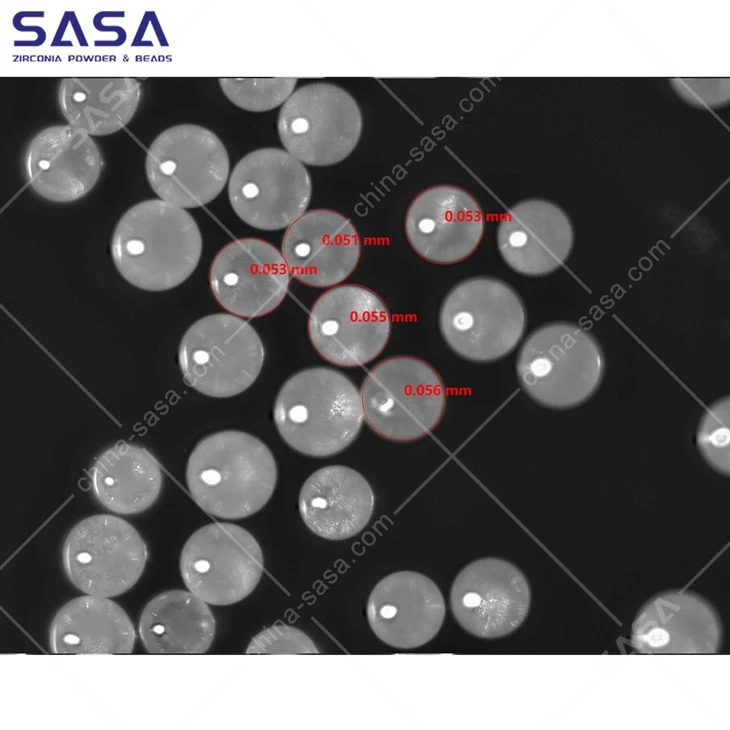

The particle size of the zirconium sulfate powder also matters. Smaller particle sizes generally have a larger surface area, which means more contact with the surrounding environment at high temperatures. This can lead to a faster decomposition rate compared to larger - sized particles.
The atmosphere in which the heating takes place is another crucial factor. In an oxidizing atmosphere, the decomposition of zirconium sulfate might be more rapid due to the presence of oxygen, which can react with the sulfur species released during decomposition. In a reducing atmosphere, the reaction pathway and rate could be different, potentially leading to the formation of different products.
Applications and Implications of High - Temperature Stability
The high - temperature stability of zirconium sulfate powder has significant implications for its applications. In the ceramic industry, zirconium sulfate can be used as a raw material for the production of zirconium - based ceramics. Understanding its high - temperature behavior helps in controlling the sintering process and the final properties of the ceramics. For example, by carefully controlling the temperature during the conversion of zirconium sulfate to zirconium dioxide, manufacturers can obtain ceramics with specific grain sizes and densities.
In the catalyst industry, zirconium sulfate can be used as a support or a component of catalysts. Its stability at high temperatures determines the catalyst's performance under harsh reaction conditions. If the zirconium sulfate decomposes too quickly at high temperatures, the catalyst's structure and activity will be affected.
Moreover, in the production of 95 Zirconia Beads Formed By Dripping, zirconium sulfate can be an intermediate material. The high - temperature stability during the manufacturing process is crucial for ensuring the quality and performance of the final zirconia beads.
Comparison with Related Zirconium Compounds
When comparing zirconium sulfate powder with other zirconium compounds such as 50 Zirconium Silicate Powder and Nano Zirconia Powder, their high - temperature stabilities are quite different.
Zirconium silicate is generally more stable at high temperatures compared to zirconium sulfate. Zirconium silicate has a more complex and stable crystal structure, which can withstand higher temperatures without significant decomposition. It is often used in high - temperature applications such as refractory materials.
Nano zirconia powder, on the other hand, has unique high - temperature properties due to its nano - scale size. It can have enhanced reactivity at high temperatures compared to bulk zirconia. However, its stability also depends on factors such as the surface treatment and the preparation method.
Ensuring Quality and Stability for Customers
As a supplier of zirconium sulfate powder, we are committed to providing high - quality products with consistent high - temperature stability. We implement strict quality control measures throughout the production process. This includes purifying the raw materials to reduce impurities, controlling the particle size distribution, and ensuring proper packaging to prevent moisture absorption.
We also conduct extensive research and testing to understand the high - temperature behavior of our zirconium sulfate powder. Our R & D team uses advanced analytical techniques such as thermogravimetric analysis (TGA) and differential scanning calorimetry (DSC) to study the decomposition process and determine the optimal storage and usage conditions for our customers.
Conclusion
In conclusion, the high - temperature stability of zirconium sulfate powder is a complex but important topic. Its behavior at high temperatures is influenced by various factors such as purity, particle size, and atmosphere. Understanding these factors is crucial for its applications in different industries, from ceramics to catalysts.
If you are interested in our zirconium sulfate powder or have any questions about its high - temperature stability, we welcome you to contact us for further discussion and potential procurement. We are here to provide you with the best - quality products and technical support to meet your specific needs.
References
- Smith, J. A. "Thermal Decomposition of Metal Sulfates." Journal of Thermal Analysis and Calorimetry, vol. 25, no. 3, 1983, pp. 345 - 360.
- Johnson, R. B. "Zirconium Compounds: Properties and Applications." Chemical Reviews, vol. 78, no. 2, 1978, pp. 153 - 175.
- Brown, C. D. "High - Temperature Behavior of Zirconium - Based Materials." Journal of the American Ceramic Society, vol. 65, no. 4, 1982, pp. C - 69 - C - 71.