

As a supplier of Zirconia Precise Ball, I've witnessed firsthand the remarkable properties of this material and the significant impact that the addition of other elements can have on its performance. Zirconia Precise Balls are widely used in various industries, including automotive, aerospace, medical, and precision engineering, due to their high hardness, excellent wear resistance, and good chemical stability. However, by carefully selecting and incorporating other elements, we can further enhance these properties and tailor the performance of Zirconia Precise Balls to meet specific application requirements.
Understanding Zirconia and Its Basic Properties
Zirconia, or zirconium dioxide (ZrO₂), is a ceramic material known for its unique combination of mechanical, thermal, and chemical properties. In its pure form, zirconia exists in three different crystal structures: monoclinic, tetragonal, and cubic, each with distinct properties. At room temperature, pure zirconia typically exists in the monoclinic phase, which is relatively brittle. However, by adding certain stabilizing elements, we can transform zirconia into the tetragonal or cubic phase, which are more ductile and less prone to cracking.

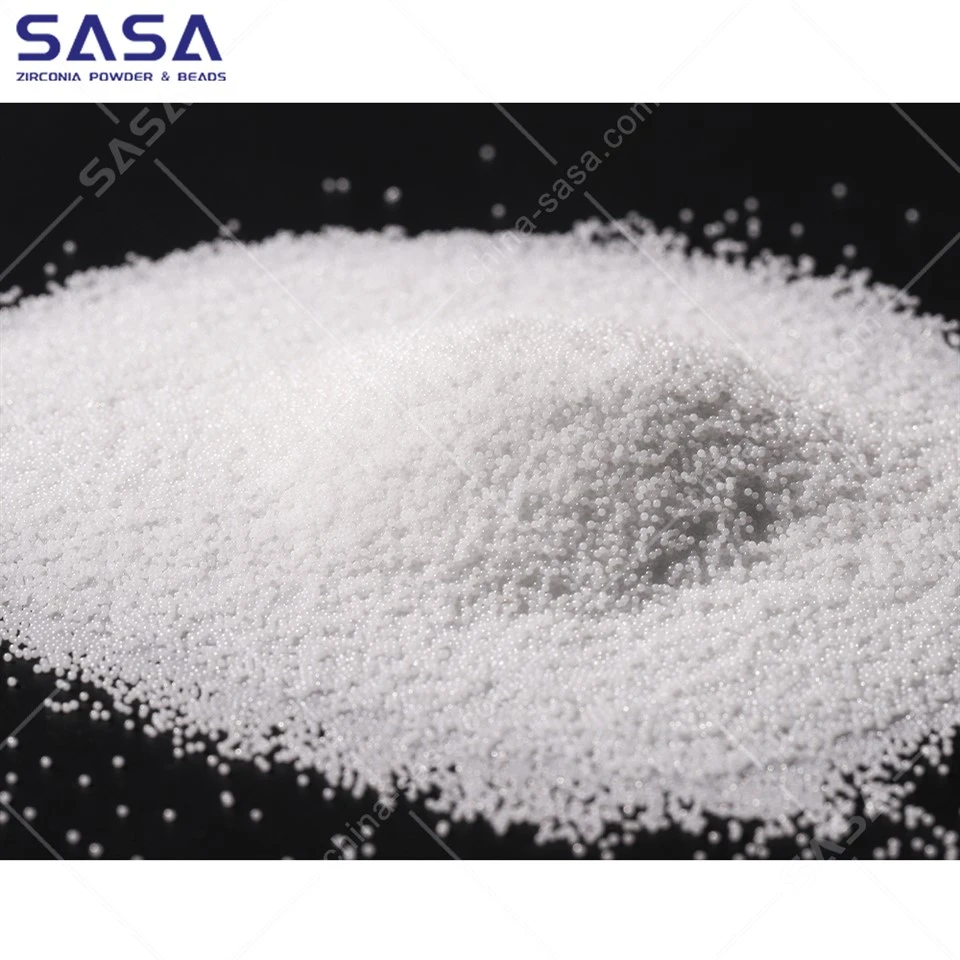
The most common stabilizing elements used in zirconia are yttrium oxide (Y₂O₃), calcium oxide (CaO), and magnesium oxide (MgO). These elements are added in small amounts (usually between 2-10 mol%) to the zirconia powder during the manufacturing process. The stabilizing elements replace some of the zirconium ions in the crystal lattice, creating vacancies that help to stabilize the tetragonal or cubic phase at room temperature. This process is known as "stabilization," and it significantly improves the toughness and strength of zirconia.
Effects of Yttrium Oxide (Y₂O₃) on Zirconia Precise Ball Performance
Yttrium oxide is one of the most widely used stabilizing elements in zirconia ceramics, particularly in the production of Zirconia Precise Balls. When added to zirconia, yttrium oxide forms a solid solution with the zirconia lattice, stabilizing the tetragonal phase at room temperature. This results in a material with high toughness, excellent wear resistance, and good thermal stability.
One of the key benefits of yttria-stabilized zirconia (YSZ) is its ability to undergo a phase transformation from the tetragonal to the monoclinic phase under stress. This transformation is accompanied by a small volume expansion, which helps to absorb energy and prevent crack propagation. As a result, YSZ is highly resistant to fracture and can withstand high loads and impacts without breaking.
In addition to its toughening effect, yttrium oxide also improves the hardness and wear resistance of zirconia. The presence of yttrium ions in the crystal lattice increases the density of the material, making it more resistant to abrasion and wear. This makes YSZ an ideal material for applications where high precision and long service life are required, such as in bearings, valves, and precision instruments.
Effects of Calcium Oxide (CaO) and Magnesium Oxide (MgO) on Zirconia Precise Ball Performance
Calcium oxide and magnesium oxide are also commonly used as stabilizing elements in zirconia ceramics. Like yttrium oxide, these elements form solid solutions with the zirconia lattice, stabilizing the tetragonal or cubic phase at room temperature. However, the effects of calcium and magnesium on zirconia performance are slightly different from those of yttrium.
Calcium-stabilized zirconia (CSZ) is known for its high thermal conductivity and low thermal expansion coefficient. These properties make CSZ an ideal material for applications where thermal shock resistance is critical, such as in furnace linings, heat exchangers, and thermal barrier coatings. CSZ also has good chemical stability and is resistant to corrosion by most acids and alkalis.
Magnesium-stabilized zirconia (MSZ) is similar to CSZ in terms of its thermal properties, but it has a higher toughness and better mechanical strength. MSZ is often used in applications where high strength and wear resistance are required, such as in cutting tools, grinding media, and wear-resistant components.
Effects of Other Elements on Zirconia Precise Ball Performance
In addition to yttrium, calcium, and magnesium, other elements can also be added to zirconia to further enhance its performance. Some of these elements include aluminum oxide (Al₂O₃), silicon carbide (SiC), and titanium dioxide (TiO₂).
Aluminum oxide is often added to zirconia to improve its hardness and wear resistance. The addition of aluminum oxide forms a composite material known as zirconia-toughened alumina (ZTA), which combines the high hardness of alumina with the toughness of zirconia. ZTA is widely used in applications such as cutting tools, wear-resistant coatings, and dental implants. You can learn more about Zirconia Toughened Alumina Beads Of 4.0 True Density on our website.
Silicon carbide is another element that can be added to zirconia to improve its mechanical properties. The addition of silicon carbide forms a composite material known as zirconia-silicon carbide (ZrC-SiC), which has high strength, high hardness, and excellent thermal shock resistance. ZrC-SiC is often used in applications such as aerospace components, high-temperature furnaces, and cutting tools.
Titanium dioxide is sometimes added to zirconia to improve its chemical stability and resistance to oxidation. The addition of titanium dioxide forms a composite material known as zirconia-titanium dioxide (ZrO₂-TiO₂), which has good corrosion resistance and is suitable for use in harsh chemical environments.
Applications of Zirconia Precise Balls with Enhanced Performance
The addition of other elements to zirconia can significantly enhance its performance, making it suitable for a wide range of applications. Some of the most common applications of Zirconia Precise Balls with enhanced performance include:
- Bearings: Zirconia Precise Balls with high toughness and wear resistance are ideal for use in bearings, where they can reduce friction, improve efficiency, and extend the service life of the bearing.
- Valves: Zirconia Precise Balls with good chemical stability and corrosion resistance are commonly used in valves, where they can withstand harsh chemical environments and prevent leakage.
- Precision Instruments: Zirconia Precise Balls with high precision and low friction are used in precision instruments, such as watches, cameras, and measuring devices, to ensure accurate and reliable operation.
- Medical Devices: Zirconia Precise Balls with biocompatibility and high strength are used in medical devices, such as dental implants, joint replacements, and surgical instruments, to provide long-term performance and durability.
Conclusion
As a supplier of Zirconia Precise Ball, I understand the importance of providing high-quality products that meet the specific needs of our customers. By carefully selecting and incorporating other elements into zirconia, we can enhance its performance and tailor it to meet the requirements of various applications. Whether you need Zirconia Precise Balls with high toughness, excellent wear resistance, or good chemical stability, we have the expertise and experience to provide you with the right solution.
If you're interested in learning more about our Zirconia Precise Balls or other zirconia-based products, such as Zirconia Ceramic Sand, please don't hesitate to contact us. Our team of experts is always available to answer your questions and help you find the best solution for your application. We look forward to working with you and providing you with the highest quality products and services.
References
- R. J. Brook, "Principles of the Mechanical Properties of Ceramics," Cambridge University Press, 1992.
- W. D. Kingery, H. K. Bowen, and D. R. Uhlmann, "Introduction to Ceramics," John Wiley & Sons, 1976.
- Y. F. Zheng, "Zirconia Ceramics: Structure, Properties, and Applications," Woodhead Publishing, 2013.