

In recent years, the demand for high - performance battery materials has been on a sharp rise due to the rapid development of electric vehicles, portable electronics, and energy storage systems. As a leading supplier of zirconium silicate powder, I often receive inquiries about the potential use of our product in battery materials. In this blog, we will explore whether zirconium silicate powder can be used in battery materials, delving into its properties, potential applications, and the current state of research in this area.
Properties of Zirconium Silicate Powder
Zirconium silicate (ZrSiO₄) is a chemically stable compound with a high melting point, excellent wear resistance, and good chemical inertness. These properties make it suitable for a wide range of industrial applications, such as ceramics, refractories, and foundry sands.
The chemical stability of zirconium silicate powder means that it can withstand harsh chemical environments, which is a crucial characteristic for battery materials. Batteries often operate under conditions that involve redox reactions, high - energy density, and the presence of electrolytes. A material that can maintain its integrity under these conditions is highly desirable.
In addition, its high melting point allows it to endure high - temperature processes during battery manufacturing. For example, some battery production methods involve sintering or heat - treatment steps, and materials with high melting points are less likely to deform or decompose during these operations.
Potential Applications in Battery Materials
As a Coating Material
One of the potential applications of zirconium silicate powder in battery materials is as a coating for electrodes. The electrodes in a battery are critical components that determine the battery's performance, including its capacity, cycle life, and safety.
A thin coating of zirconium silicate on the electrode surface can act as a protective layer. It can prevent the direct contact between the electrode material and the electrolyte, reducing side reactions that can lead to capacity fading and safety issues. For instance, in lithium - ion batteries, the decomposition of the electrolyte on the electrode surface can form a solid - electrolyte interphase (SEI) layer. However, an unstable SEI layer can cause problems such as lithium plating and increased internal resistance. A zirconium silicate coating may help to form a more stable SEI layer, improving the battery's overall performance.
In Solid - State Electrolytes
Solid - state batteries are considered the next - generation of battery technology due to their potential for higher energy density, better safety, and longer cycle life compared to traditional liquid - electrolyte batteries. Zirconium silicate powder could potentially be used as a component in solid - state electrolytes.
Solid - state electrolytes need to have high ionic conductivity and good mechanical properties. Zirconium silicate, with its chemical stability, can contribute to the mechanical strength of the solid - state electrolyte. Moreover, by doping or modifying zirconium silicate, it may be possible to enhance its ionic conductivity, making it a suitable candidate for use in solid - state battery electrolytes.
As an Additive in Electrode Materials
Zirconium silicate powder can also be used as an additive in electrode materials. Adding a small amount of zirconium silicate to the electrode active material may improve its structural stability. For example, in lithium - sulfur batteries, the sulfur cathode suffers from a large volume change during the charge - discharge process, which can lead to electrode pulverization and capacity decay. The addition of zirconium silicate may help to buffer the volume change, maintaining the integrity of the electrode structure and improving the battery's cycle life.
Current State of Research
Although the potential of zirconium silicate powder in battery materials is promising, the current research in this area is still in its early stages. There are relatively few studies specifically focused on the application of zirconium silicate in batteries compared to more well - known battery materials such as lithium cobalt oxide or graphite.
However, some preliminary research has shown positive results. For example, some studies have demonstrated that a zirconium - based coating can improve the electrochemical performance of lithium - ion battery electrodes. These findings suggest that zirconium silicate, which contains zirconium, may also have similar beneficial effects.
Related Products for Battery Manufacturing
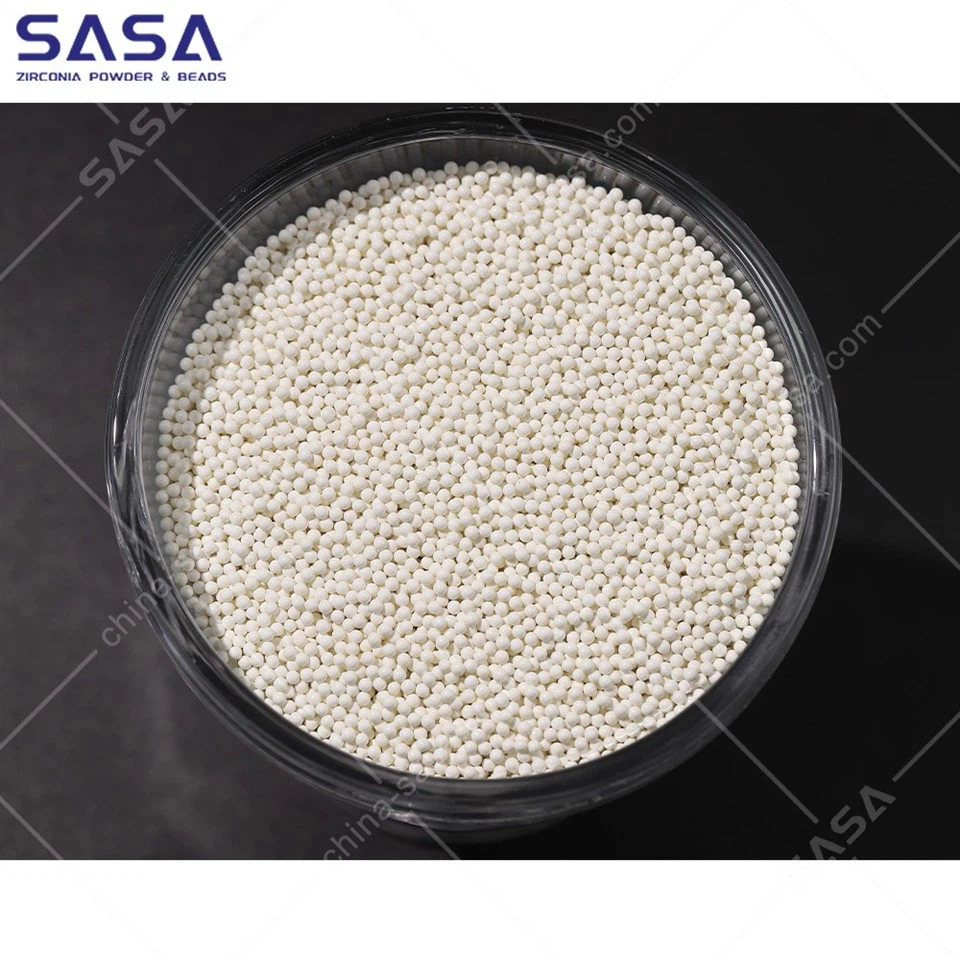
In addition to zirconium silicate powder, our company also offers a range of related products that can be used in battery manufacturing. For example, we have 80 Zirconia Beads, 85 Zirconia Beads, and 95 Zirconia Beads Formed By Dripping. These zirconia beads are widely used in the grinding and dispersion processes of battery materials. They can help to achieve a more uniform particle size distribution of electrode materials, which is crucial for improving battery performance.

Conclusion and Call to Action
In conclusion, zirconium silicate powder has the potential to be used in battery materials due to its chemical stability, high melting point, and other favorable properties. While the research in this area is still in its infancy, the preliminary results are encouraging.
If you are interested in exploring the use of zirconium silicate powder in your battery manufacturing process or have any questions about our products, we invite you to contact us for further discussion. Our team of experts is ready to provide you with detailed information and technical support. We believe that through collaboration and innovation, we can unlock the full potential of zirconium silicate powder in the battery industry.
References
- Some research papers on battery materials and zirconium - based compounds.
- Industry reports on the development of next - generation battery technologies.