

Sand-blasting beads are essential materials in various industrial applications, from surface cleaning and preparation to finishing and peening. One of the critical characteristics that significantly impacts their performance is sphericity. In this blog, as a seasoned sand-blasting beads supplier, I will delve into what the sphericity of sand-blasting beads is, why it matters, and how it relates to the different types of sand-blasting beads we offer.
Understanding Sphericity
Sphericity is a measure of how closely a particle resembles a perfect sphere. In the context of sand-blasting beads, it refers to the degree to which the beads are spherical in shape. A perfectly spherical bead has a sphericity value of 1, while values closer to 0 indicate a more irregular shape.
The sphericity of sand-blasting beads can be quantified using various methods. One common approach is to use image analysis techniques, where high-resolution images of the beads are captured and analyzed to determine their shape and size. Another method involves measuring the aspect ratio of the beads, which is the ratio of the longest to the shortest axis of the particle. A lower aspect ratio indicates a more spherical shape.
Why Sphericity Matters
The sphericity of sand-blasting beads plays a crucial role in their performance and effectiveness in various applications. Here are some of the key reasons why sphericity is important:
Uniform Abrasion
Spherical beads provide more uniform abrasion compared to irregularly shaped beads. When a spherical bead impacts a surface, it distributes the force evenly across the contact area, resulting in a more consistent and controlled abrasion pattern. This is particularly important in applications where a smooth and uniform surface finish is required, such as in the aerospace and automotive industries.
Reduced Dust Generation
Irregularly shaped beads tend to break apart more easily during the sand-blasting process, generating more dust. In contrast, spherical beads are more durable and less likely to fracture, resulting in less dust generation. This not only improves the working environment but also reduces the risk of respiratory problems for the operators.
Longer Service Life
Spherical beads have a longer service life compared to irregularly shaped beads. Their smooth surface and uniform shape reduce the wear and tear on the beads, allowing them to be reused multiple times before needing to be replaced. This can significantly reduce the cost of sand-blasting operations in the long run.
Better Flowability
Spherical beads have better flowability compared to irregularly shaped beads. They can easily flow through the sand-blasting equipment, ensuring a consistent and continuous supply of beads to the blasting nozzle. This improves the efficiency of the sand-blasting process and reduces the risk of clogging.
Types of Sand-Blasting Beads and Their Sphericity
As a sand-blasting beads supplier, we offer a wide range of beads with different materials and properties. Here are some of the most common types of sand-blasting beads and their sphericity:
Zirconium Silicate Ceramic Sand
Zirconium silicate ceramic sand is a popular choice for sand-blasting applications due to its high hardness, wear resistance, and chemical stability. These beads have a relatively high sphericity, typically ranging from 0.8 to 0.9. Their spherical shape provides uniform abrasion and reduced dust generation, making them suitable for a variety of applications, including surface cleaning, deburring, and shot peening.
Zirconia Ceramic Sand
Zirconia ceramic sand is another high-performance sand-blasting bead material. It has excellent hardness, toughness, and heat resistance, making it ideal for demanding applications. Zirconia ceramic sand beads have a very high sphericity, often close to 1. Their near-perfect spherical shape ensures uniform abrasion, long service life, and minimal dust generation. They are commonly used in industries such as aerospace, automotive, and electronics for precision surface finishing.
Zirconia Sandblasting Beads
Zirconia sandblasting beads are similar to zirconia ceramic sand but are typically smaller in size. They have a high sphericity and are known for their excellent polishing and finishing capabilities. These beads are often used in applications where a fine and smooth surface finish is required, such as in the jewelry and watchmaking industries.
Factors Affecting Sphericity
Several factors can affect the sphericity of sand-blasting beads during the manufacturing process. Here are some of the key factors:
Raw Material Quality
The quality of the raw materials used to manufacture the sand-blasting beads can have a significant impact on their sphericity. High-quality raw materials with uniform particle size and shape are more likely to produce beads with a high sphericity.
Manufacturing Process
The manufacturing process also plays a crucial role in determining the sphericity of the beads. Techniques such as spray drying, sintering, and grinding can be used to control the shape and size of the beads. The parameters of these processes, such as temperature, pressure, and time, need to be carefully optimized to ensure the production of beads with a high sphericity.
Post-Treatment
Post-treatment processes, such as polishing and coating, can also improve the sphericity of the beads. Polishing can remove any irregularities on the surface of the beads, while coating can enhance their durability and wear resistance.
Measuring and Controlling Sphericity
To ensure the quality and performance of our sand-blasting beads, we implement strict quality control measures to measure and control their sphericity. Here are some of the methods we use:
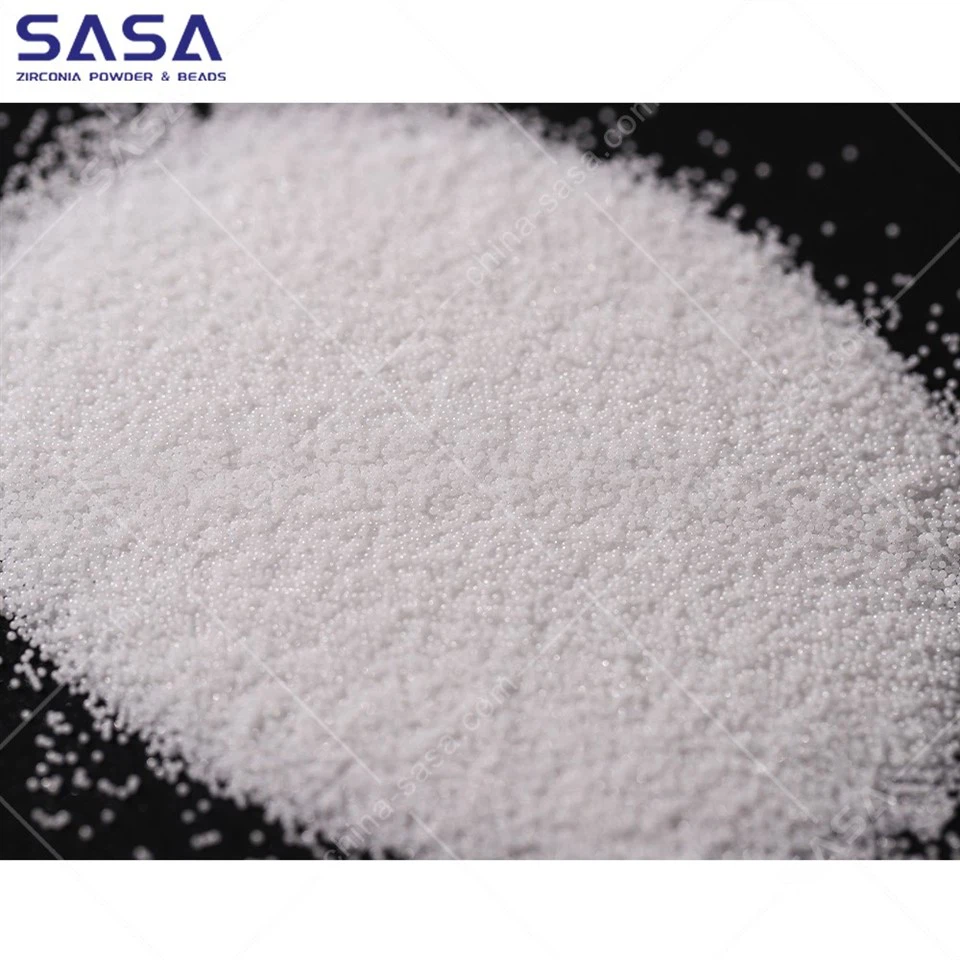

Optical Inspection
We use optical inspection systems to visually inspect the beads and measure their sphericity. These systems can capture high-resolution images of the beads and analyze their shape and size using advanced software algorithms.
Sieve Analysis
Sieve analysis is a common method used to determine the particle size distribution of the beads. By passing the beads through a series of sieves with different mesh sizes, we can separate the beads based on their size and calculate the percentage of beads within a specific size range. This information can be used to ensure that the beads meet the required specifications.
Laser Diffraction
Laser diffraction is a more advanced method used to measure the particle size and shape of the beads. This technique uses a laser beam to scatter light off the beads, and the scattered light is detected by a detector. The data collected from the detector is then analyzed to determine the particle size distribution and shape of the beads.
Conclusion
In conclusion, the sphericity of sand-blasting beads is a critical characteristic that significantly impacts their performance and effectiveness in various applications. Spherical beads provide more uniform abrasion, reduced dust generation, longer service life, and better flowability compared to irregularly shaped beads. As a sand-blasting beads supplier, we offer a wide range of beads with different materials and properties, including Zirconium Silicate Ceramic Sand, Zirconia Ceramic Sand, and Zirconia Sandblasting Beads. We implement strict quality control measures to ensure that our beads have a high sphericity and meet the required specifications.
If you are looking for high-quality sand-blasting beads with excellent sphericity, please feel free to contact us. Our team of experts will be happy to assist you in selecting the right beads for your specific application and provide you with the best possible solution.
References
- ASTM International. (2021). Standard Terminology for Abrasive Blast Cleaning. ASTM D3924 - 21.
- Schubert, H. (2008). Size Reduction. In Handbook of Powder Technology (Vol. 1, pp. 1 - 40). Elsevier.
- Svarovsky, L. (1990). Solid - Liquid Separation. Butterworth - Heinemann.