

Nano titanium oxide powder, also known as nano - titania, has emerged as a remarkable material with a wide range of applications due to its unique physical and chemical properties. As a supplier of nano titanium oxide powder, I am excited to share with you the diverse fields where this material plays a crucial role.
1. Environmental Protection
One of the most significant applications of nano titanium oxide powder is in environmental protection. Nano titanium oxide is a photocatalyst. When exposed to ultraviolet (UV) light, it can generate electron - hole pairs. These pairs react with water and oxygen in the environment to produce highly reactive hydroxyl radicals and superoxide anions.
These reactive species are capable of breaking down organic pollutants, such as volatile organic compounds (VOCs), pesticides, and dyes. In air purification systems, nano titanium oxide - coated filters can effectively remove harmful gases and odors. For example, in indoor environments, it can decompose formaldehyde, a common indoor pollutant that can cause health problems. In water treatment, nano titanium oxide can be used to degrade organic contaminants in wastewater, making the water cleaner and safer for reuse or discharge.
2. Solar Energy
Nano titanium oxide is a key component in dye - sensitized solar cells (DSSCs). In DSSCs, nano titanium oxide forms a porous film that serves as a support for the dye molecules. The dye absorbs sunlight and injects electrons into the conduction band of the nano titanium oxide. These electrons are then collected by the electrodes, generating an electric current.
Compared to traditional silicon - based solar cells, DSSCs are cheaper to manufacture and can operate under low - light conditions. The high surface area of nano titanium oxide allows for better adsorption of dye molecules, enhancing the light - harvesting efficiency of the solar cell. This application has the potential to make solar energy more accessible and cost - effective, contributing to the development of renewable energy sources.
3. Antibacterial and Self - Cleaning Coatings
Nano titanium oxide has excellent antibacterial properties. The reactive oxygen species generated by its photocatalytic activity can damage the cell membranes of bacteria, leading to their inactivation. This makes it an ideal material for antibacterial coatings. For example, in the food industry, it can be used to coat food packaging materials to prevent the growth of bacteria and extend the shelf life of food products.
In addition, nano titanium oxide can be used in self - cleaning coatings. When applied to the surfaces of buildings, glass, or automotive windshields, it can decompose organic dirt and contaminants under sunlight. Rainwater can then easily wash away the decomposed dirt, keeping the surfaces clean. This reduces the need for manual cleaning and maintenance, saving time and resources.
4. Cosmetics
In the cosmetics industry, nano titanium oxide is widely used as a sunscreen agent. It can scatter and absorb UV radiation, protecting the skin from the harmful effects of the sun, such as sunburn, premature aging, and skin cancer. Nano titanium oxide has a smaller particle size compared to traditional titanium oxide, which makes it more transparent on the skin and less likely to leave a white cast.
Moreover, its photocatalytic activity can also help to decompose free radicals on the skin, which are produced by UV exposure and can cause oxidative damage. This dual function of UV protection and antioxidant activity makes nano titanium oxide a popular ingredient in high - quality sunscreens and other skin - care products.
5. Pigments and Paints
Nano titanium oxide is an important pigment in the paint and coating industry. It has high refractive index, which gives paints excellent hiding power and brightness. Compared to conventional titanium oxide pigments, nano - sized particles can provide better dispersion and a smoother finish.
In addition, the photocatalytic property of nano titanium oxide can be utilized in self - cleaning paints. These paints can keep the painted surfaces clean by decomposing dirt and pollutants over time. They are especially useful in outdoor applications, where buildings and structures are exposed to environmental contaminants.
6. Catalysis in Chemical Reactions
Nano titanium oxide can act as a catalyst or a support for other catalysts in various chemical reactions. Its high surface area and unique electronic properties make it suitable for promoting chemical reactions. For example, it can be used in the oxidation of hydrocarbons, the hydrogenation of organic compounds, and the synthesis of fine chemicals.
In the petrochemical industry, nano titanium oxide - based catalysts can be used to improve the efficiency of cracking reactions, which are important for the production of fuels and other petrochemical products. The ability to control the particle size and surface properties of nano titanium oxide allows for the optimization of catalytic performance, leading to more selective and efficient chemical processes.
Related Products and Their Applications
As a supplier, we also offer other related products that can be used in conjunction with nano titanium oxide powder. For example, Zirconia Toughened Alumina Beads Of 3.8 True Density are often used in the grinding and dispersion processes of nano materials. These beads have high hardness and wear resistance, which can ensure efficient and uniform dispersion of nano titanium oxide powder.
Compound Zirconia Powder can be used as an additive in some applications. It can improve the mechanical properties and thermal stability of materials when combined with nano titanium oxide. For example, in ceramic materials, the addition of compound zirconia powder can enhance the strength and toughness of the ceramic, while nano titanium oxide can provide other functional properties such as photocatalytic activity.

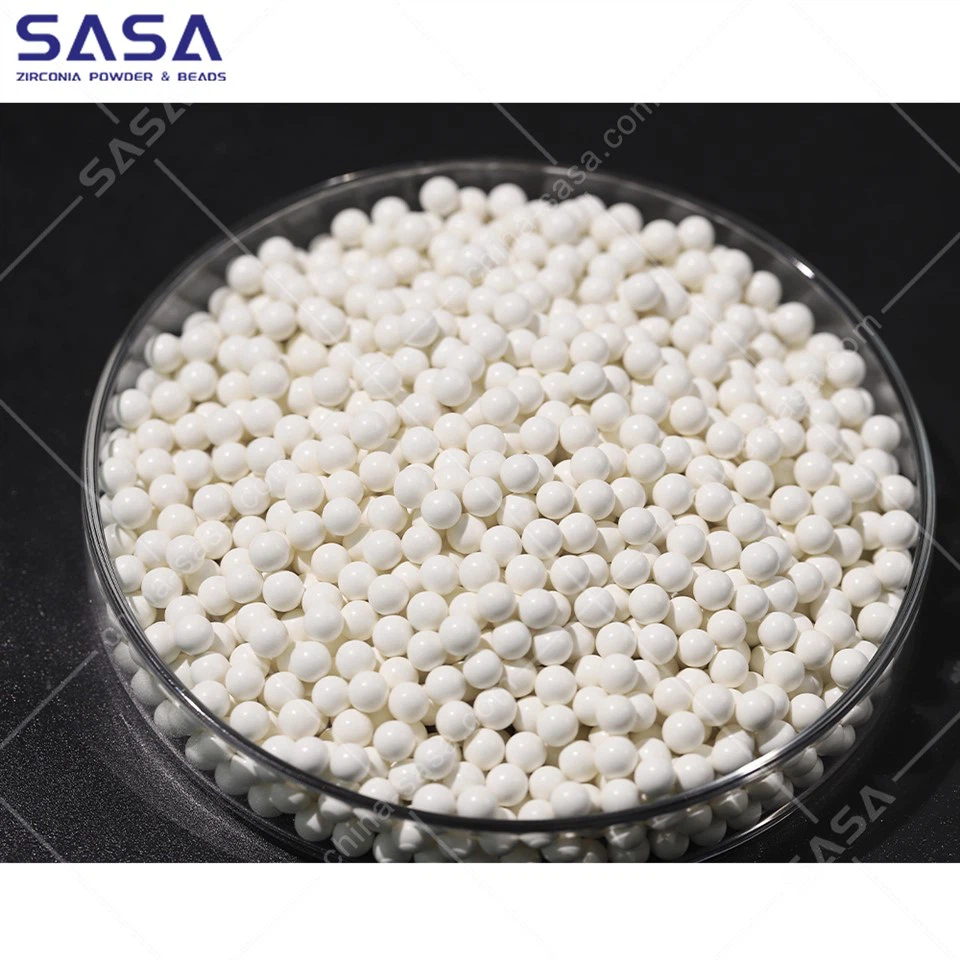
65 Zirconium Silicate Beads are another type of grinding media that can be used in the production of nano titanium oxide - based products. They are cost - effective and suitable for a wide range of grinding applications, ensuring the quality and performance of the final products.
Contact for Purchase and Collaboration
If you are interested in our nano titanium oxide powder or any of our related products, we are ready to discuss your specific needs. Whether you are in the environmental protection, solar energy, cosmetics, or other industries, we can provide high - quality products and technical support. Please feel free to contact us for more information and to start a purchasing negotiation. We look forward to working with you to meet your material requirements and contribute to the success of your projects.
References
- Fujishima, A., & Honda, K. (1972). Electrochemical photolysis of water at a semiconductor electrode. Nature, 238(5358), 37 - 38.
- O'Regan, B., & Grätzel, M. (1991). A low - cost, high - efficiency solar cell based on dye - sensitized colloidal TiO₂ films. Nature, 353(6346), 737 - 740.
- Reller, A., Tüysüz, H., & Schüth, F. (2013). Nanostructured titania in energy applications. Chemical Society Reviews, 42(7), 2904 - 2919.