

Hey there! As a supplier of sand - blasting beads, I've seen firsthand how the density of these beads can have a huge impact on the blasting process. In this blog, I'm gonna break down how density plays a role and why it matters to you.
Let's start with the basics. Density is basically how much mass is packed into a certain volume. For sand - blasting beads, a higher - density bead means there's more material in a given space. This might seem like a small detail, but it can change the whole game when it comes to blasting.
Impact on Blasting Force
One of the most significant ways density affects the blasting process is through the force of the impact. When a sand - blasting bead hits a surface, the force it exerts depends on its mass and velocity. Higher - density beads have more mass, so when they're propelled at the same speed as lower - density beads, they pack a much harder punch.
Imagine you're trying to clean a rusty metal surface. If you use low - density beads, they might not be able to remove the rust effectively. They'll bounce off the surface without really digging in. On the other hand, high - density beads can cut through the rust like a hot knife through butter. They hit the surface with enough force to break up the rust and expose the clean metal underneath.
This also means that with high - density beads, you can often achieve the same results in less time. You won't have to blast the surface for as long because the beads are doing a more efficient job. This can save you a lot of time and money in the long run, especially if you're working on large - scale projects.

Surface Finish
The density of sand - blasting beads also affects the surface finish of the material being blasted. Lower - density beads tend to create a smoother finish. They don't dig as deeply into the surface, so they're great for applications where you want a more refined look. For example, if you're working on a delicate piece of jewelry or a high - end automotive part, low - density beads can give you that smooth, polished finish.
On the flip side, high - density beads create a rougher surface finish. They dig into the material, leaving behind small indentations and a more textured look. This can be useful in applications where you need a surface with good adhesion, like when you're preparing a surface for painting or coating. The rough surface provides more area for the paint or coating to stick to, resulting in a more durable finish.
Wear and Tear
Another factor to consider is the wear and tear on the blasting equipment. High - density beads are more abrasive, which means they can cause more damage to the blasting nozzles and other parts of the equipment over time. If you're using high - density beads regularly, you'll need to replace your nozzles and other components more frequently.
Low - density beads, on the other hand, are less abrasive. They cause less wear and tear on the equipment, which can save you money on maintenance and replacement parts. However, you need to balance this against the effectiveness of the blasting. If the low - density beads aren't doing the job, you might end up spending more time and money on repeated blasting.
Cost - effectiveness
When it comes to cost - effectiveness, it's not always clear - cut. High - density beads are often more expensive upfront because they're made from more dense materials. But as I mentioned earlier, they can be more efficient, which means you might use less of them in the long run.
Low - density beads are usually cheaper, but if they don't work as well, you might end up using more of them to achieve the same results. You also need to factor in the cost of equipment maintenance. If high - density beads are causing more wear and tear on your equipment, that cost needs to be considered as well.
Our Products
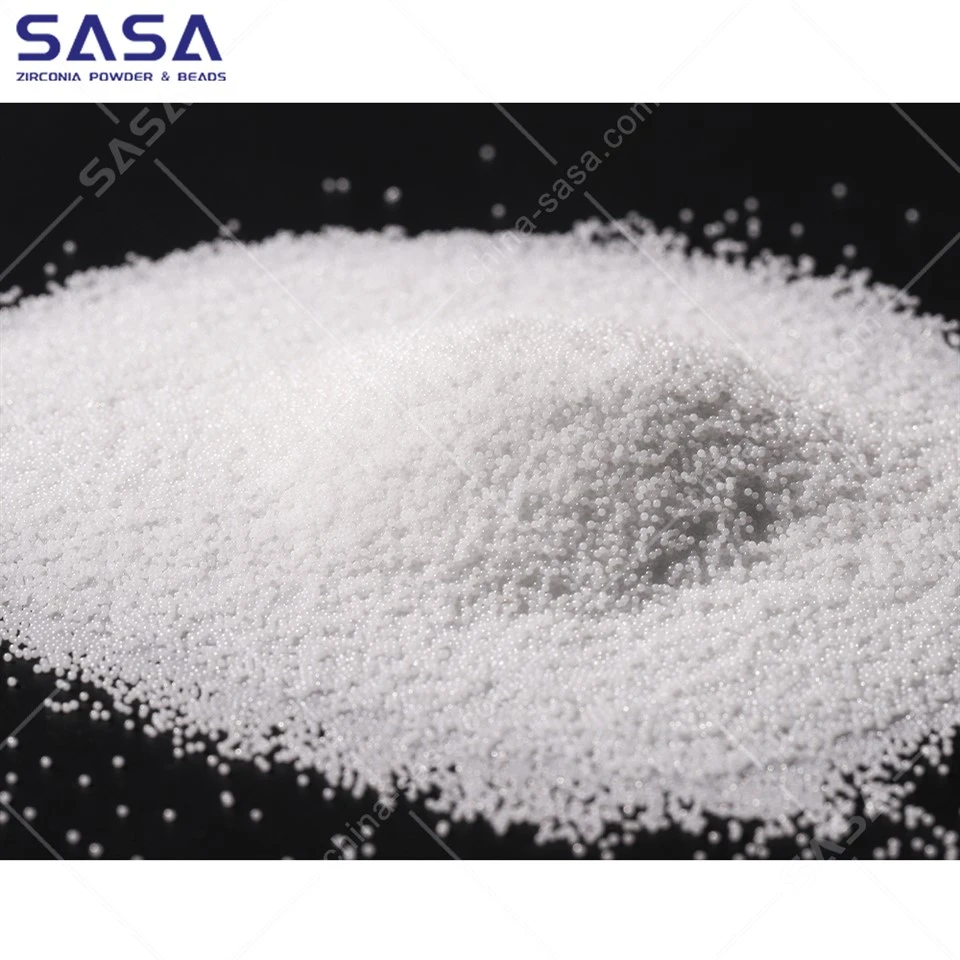
At our company, we offer a wide range of sand - blasting beads with different densities to suit your specific needs. For example, our Zirconia Sandblasting Beads are high - density beads that are great for heavy - duty blasting jobs. They have excellent impact force and can quickly remove tough coatings and rust.
If you're looking for a smoother finish, our Zirconia Ceramic Sand is a lower - density option. It's perfect for applications where you need a more refined surface.
We also offer Zirconium Carbonate Powder, which can be used in the production of sand - blasting beads and other zirconium - based products.
Conclusion
In conclusion, the density of sand - blasting beads has a major impact on the blasting process. It affects the blasting force, surface finish, wear and tear on equipment, and cost - effectiveness. When choosing sand - blasting beads, you need to consider your specific application and what you're trying to achieve.
If you're still not sure which type of sand - blasting beads are right for you, don't hesitate to get in touch. We're here to help you find the perfect solution for your blasting needs. Whether you're a small - scale hobbyist or a large - scale industrial operation, we have the products and expertise to support you. So, let's start a conversation and see how we can work together to make your blasting projects a success!
References
- Smith, J. (2020). "The Science of Sand - Blasting". Industrial Blasting Journal.
- Johnson, A. (2019). "Density and its Effects on Abrasive Blasting". Abrasive Technology Review.