

Anatase titanium dioxide is a remarkable material that has gained significant attention in recent years due to its unique ability to enable self - cleaning properties. As a trusted supplier of anatase titanium dioxide, I am excited to delve into the science behind this fascinating phenomenon and explore its wide - ranging applications.

The Basics of Anatase Titanium Dioxide
Anatase is one of the three major crystalline forms of titanium dioxide, the other two being rutile and brookite. Anatase titanium dioxide is characterized by its distinct crystal structure, which gives it specific physical and chemical properties. It has a relatively high surface area and a bandgap energy of about 3.2 eV. This bandgap energy plays a crucial role in its photocatalytic activity.
When anatase titanium dioxide is exposed to ultraviolet (UV) light, which has energy higher than its bandgap, electrons in the valence band are excited to the conduction band, leaving behind holes in the valence band. These electron - hole pairs are highly reactive species. The electrons can react with oxygen molecules in the air to form superoxide anions ((O_{2}^{-})), while the holes can react with water molecules to form hydroxyl radicals ((·OH)).
The Self - Cleaning Mechanism
The self - cleaning properties of anatase titanium dioxide are primarily based on two main mechanisms: photocatalysis and superhydrophilicity.
Photocatalysis
The highly reactive hydroxyl radicals ((·OH)) and superoxide anions ((O_{2}^{-})) generated during the photocatalytic process are extremely powerful oxidants. They can break down a wide range of organic compounds, including dirt, grime, and pollutants that accumulate on surfaces. For example, organic stains such as grease and oil can be oxidized by these radicals into smaller, more volatile molecules like carbon dioxide and water.
In outdoor applications, such as on building facades coated with anatase titanium dioxide - containing paints, the photocatalytic action continuously breaks down the air pollutants that settle on the surface. This not only keeps the building clean but also helps to improve the air quality around the building by removing harmful pollutants like nitrogen oxides (NOx) and volatile organic compounds (VOCs).
Superhydrophilicity
In addition to photocatalysis, anatase titanium dioxide also exhibits superhydrophilicity under UV light. Superhydrophilicity means that the contact angle between water and the surface is extremely small, typically less than 10 degrees. When water comes into contact with a superhydrophilic surface coated with anatase titanium dioxide, it spreads out evenly, forming a thin film.
This thin film of water has several benefits for self - cleaning. Firstly, it helps to carry away the degraded organic matter more effectively. The spreading water acts like a natural detergent, flushing away the broken - down pollutants. Secondly, it prevents the formation of water droplets, which can leave behind water spots and stains. This is particularly useful in applications where a clear and visible surface is desired, such as in solar panels and windows.
Applications of Anatase Titanium Dioxide in Self - Cleaning
The self - cleaning properties of anatase titanium dioxide have led to a wide range of applications across various industries.
Architecture and Building Materials
As mentioned earlier, anatase titanium dioxide is often incorporated into paints and coatings for building facades. Self - cleaning facades not only reduce the need for manual cleaning, which can be costly and time - consuming, but also maintain the aesthetic appearance of buildings for a longer time. Moreover, the air - purifying effect of the photocatalytic action contributes to a more sustainable and healthy urban environment.
Glass and Windows
Coating glass surfaces with anatase titanium dioxide can make windows self - cleaning. This is especially beneficial for high - rise buildings where window cleaning is a challenging and dangerous task. The superhydrophilicity of the coated glass ensures that rainwater can easily wash away dirt and streaks, leaving the windows clear and transparent.
Solar Panels
Solar panels need to maintain a clean surface to ensure maximum efficiency in converting sunlight into electricity. Dust, dirt, and other pollutants can reduce the amount of sunlight reaching the photovoltaic cells. By coating solar panels with anatase titanium dioxide, the self - cleaning effect can help to keep the panels clean, thus improving their energy conversion efficiency over time.
Our Anatase Titanium Dioxide Products
As a supplier of anatase titanium dioxide, we offer high - quality products that are suitable for a variety of self - cleaning applications. Our anatase titanium dioxide is carefully manufactured to ensure a consistent crystal structure and high photocatalytic activity.
We understand the importance of purity and particle size distribution in achieving optimal self - cleaning performance. Our products have a high degree of purity, which minimizes the presence of impurities that could potentially inhibit the photocatalytic reaction. Additionally, we control the particle size to ensure a large surface area, which enhances the generation of reactive species during photocatalysis.
Complementary Products
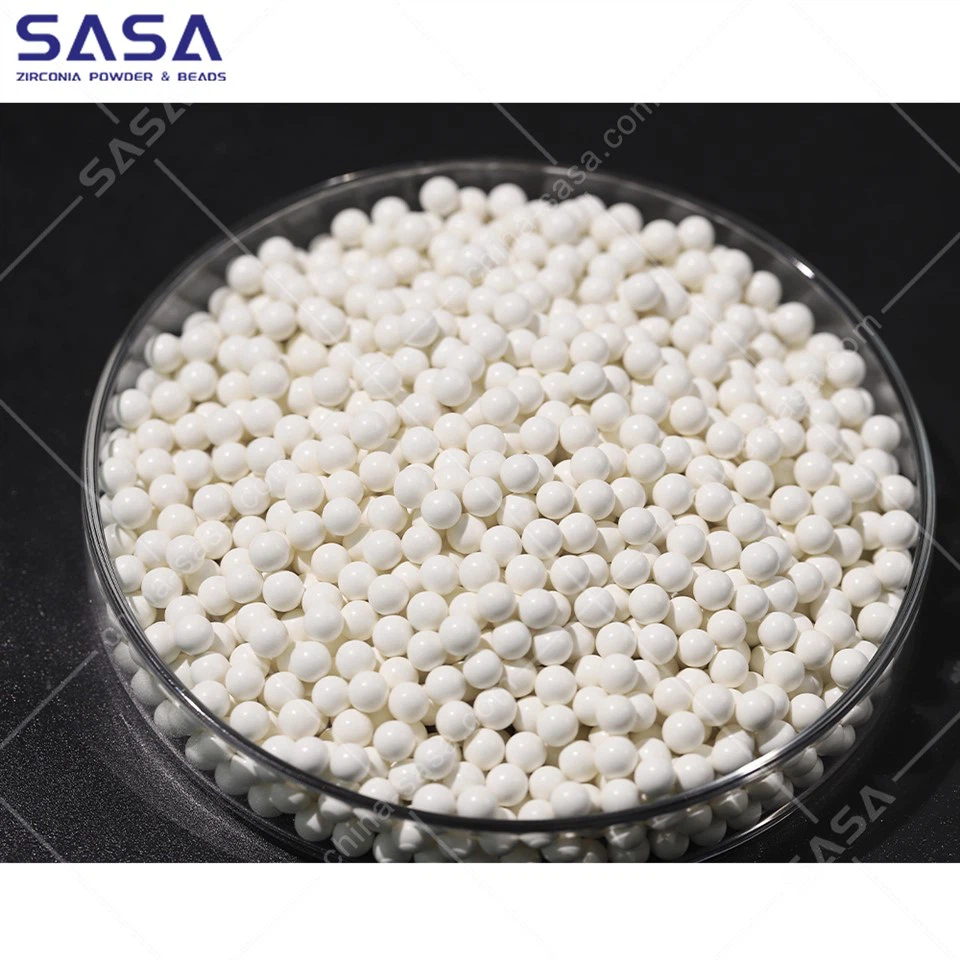
In addition to our anatase titanium dioxide products, we also offer related materials that can further enhance the performance of coatings and materials. For example, we supply Zirconia Ceramic Powder, which can be used in combination with anatase titanium dioxide in high - performance ceramic coatings. Zirconia ceramic powder enhances the hardness and wear resistance of the coating, while the anatase titanium dioxide provides the self - cleaning function.
We also offer 65 Zirconium Silicate Beads and 55 Zirconium Silicate Powder. These products can be used in the grinding and dispersion processes during the formulation of anatase titanium dioxide - containing coatings, ensuring a uniform distribution of the titanium dioxide particles and improving the overall quality of the coating.
Why Choose Our Anatase Titanium Dioxide?
There are several reasons why customers should choose our anatase titanium dioxide for their self - cleaning applications. Firstly, our products are backed by a team of experienced scientists and researchers who continuously work on improving the quality and performance of our materials. We invest in state - of - the - art research and development facilities to ensure that our products meet the highest industry standards.
Secondly, we offer excellent customer service. Our sales and technical support teams are always ready to assist customers in selecting the right product for their specific applications. We can provide detailed technical information and guidance on the formulation and application of our anatase titanium dioxide products.
Finally, we are committed to sustainability. Our manufacturing processes are designed to minimize environmental impact, and our products contribute to a more sustainable future by reducing the need for chemical cleaners and energy - intensive cleaning methods.
Contact Us for Procurement
If you are interested in our anatase titanium dioxide products or any of our complementary materials, we encourage you to contact us for procurement. Our team is eager to discuss your specific requirements and provide you with a customized solution. Whether you are a large - scale manufacturer or a small - scale researcher, we have the products and expertise to meet your needs.
References
- Fujishima, A., Zhang, X., & Tryk, D. A. (2008). TiO₂ photocatalysis and related surface phenomena. Surface Science Reports, 63(12), 515 - 582.
- Mills, A., & Le Hunte, S. (1997). An overview of semiconductor photocatalysis. Journal of Photochemistry and Photobiology A: Chemistry, 108(1), 1 - 35.
- Wang, R., Hashimoto, K., Fujishima, A., Chikuni, M., Kojima, E., Kitamura, A.,... & Watanabe, T. (1997). Light - induced amphiphilic surfaces. Nature, 388(6641), 431 - 432.