

Hey there! As a supplier of Silicon Nitride Ceramic Beads, I've gotten a ton of questions about how these little wonders perform in corrosive environments. So, I thought I'd sit down and share what I know.
First off, let's talk about what Silicon Nitride Ceramic Beads are. They're super hard, wear - resistant beads made from silicon nitride. This material has some amazing properties that make it stand out in all sorts of applications, especially when it comes to dealing with corrosion.
In corrosive environments, materials usually face a tough battle. Corrosion can be caused by all kinds of things, like acids, alkalis, and salts. When a material is exposed to these corrosive agents, it can start to break down, lose its strength, and eventually fail. But Silicon Nitride Ceramic Beads are different.
One of the key reasons they perform so well in corrosive settings is their chemical stability. Silicon nitride has a strong chemical bond structure. This means that it doesn't react easily with most common corrosive substances. For example, in acidic environments, many metals would start to dissolve right away. But Silicon Nitride Ceramic Beads can hold their own. They resist the attack of acids like hydrochloric acid and sulfuric acid to a large extent.
Let's take a look at some real - world scenarios. In the chemical industry, there are often processes where substances are being mixed, ground, or stirred in corrosive solutions. Our Silicon Nitride Ceramic Beads are a great choice for these applications. They can be used in bead mills for grinding and dispersing materials in acidic or alkaline slurries. Since they don't corrode easily, they maintain their shape and size over time. This ensures a consistent grinding performance, which is crucial for getting high - quality products.
Another area where they shine is in the marine environment. The ocean is a highly corrosive place, filled with saltwater and various microorganisms. If you're using equipment in the ocean, like pumps or valves, the parts that come into contact with the water need to be corrosion - resistant. Silicon Nitride Ceramic Beads can be used as bearings or as components in these systems. Their ability to withstand the corrosive effects of saltwater means that the equipment will have a longer lifespan and require less maintenance.
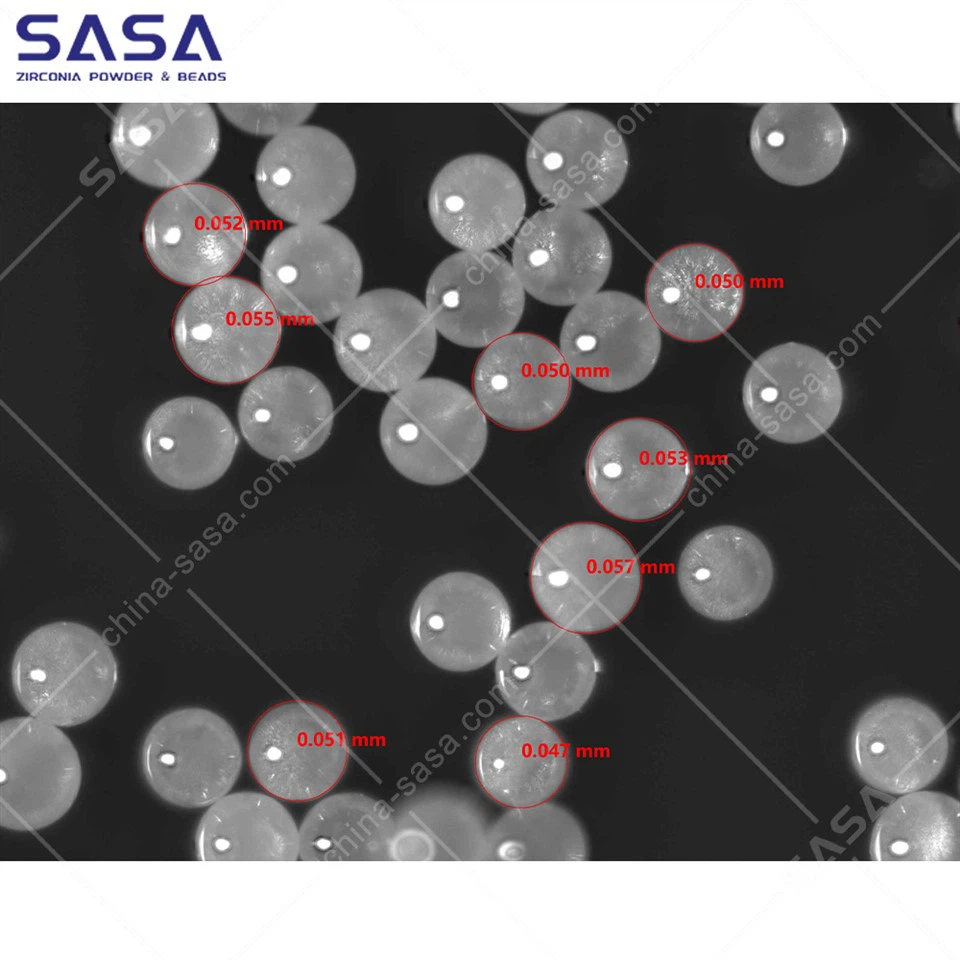
Now, let's compare them with some other types of beads. We have 0.05mm Micro Beads, Formed By Dripping Method. These zirconium oxide beads are also popular for grinding applications. While they have good wear resistance, in some highly corrosive environments, they may not perform as well as Silicon Nitride Ceramic Beads. Zirconium oxide can react with certain strong acids or alkalis over time, which can lead to a decrease in its performance.
Zirconia Sandblasting Beads are another option. They're used for sandblasting surfaces to clean or prepare them. But when it comes to long - term exposure to corrosive substances, Silicon Nitride Ceramic Beads are more reliable. Their chemical stability gives them an edge in environments where corrosion is a major concern.

And then there's Zirconium Sulfate Powder. This powder is used in various chemical processes, but it's not a bead - like material. It has its own set of applications, but it can't offer the same kind of mechanical and corrosion - resistant properties as our Silicon Nitride Ceramic Beads.
When it comes to the physical properties that contribute to their corrosion resistance, their density also plays a role. Silicon Nitride Ceramic Beads have a relatively high density, which means they're less likely to be penetrated by corrosive agents. The dense structure acts as a barrier, preventing the corrosive substances from reaching the inner parts of the beads.
In addition, their hardness is a big advantage. Hard materials are generally more resistant to abrasion, which can be a secondary effect of corrosion. In a corrosive environment, there may be particles or debris that can cause abrasion on the surface of the beads. But because Silicon Nitride Ceramic Beads are so hard, they can withstand this abrasion better than many other materials.
However, it's important to note that no material is completely immune to corrosion. Under extremely harsh conditions, such as very high - temperature and high - pressure corrosive environments, even Silicon Nitride Ceramic Beads may experience some degradation over a long period. But compared to most other materials, their performance is still far superior.
If you're in the market for high - performance beads for your corrosive applications, our Silicon Nitride Ceramic Beads are definitely worth considering. We've got a wide range of sizes and specifications to meet your specific needs. Whether you need them for small - scale laboratory experiments or large - scale industrial processes, we can provide the right solution.
If you're interested in learning more about our Silicon Nitride Ceramic Beads or want to discuss your specific requirements, don't hesitate to reach out. We're always happy to have a chat and help you find the best product for your situation. Let's start a conversation and see how we can work together to solve your corrosion - related challenges.
References
- "Ceramics in Corrosive Environments" - A technical report on the performance of various ceramic materials in different corrosive settings.
- "Chemical Stability of Silicon Nitride" - A research paper that delves into the chemical properties of silicon nitride and its resistance to corrosion.
- Industry case studies on the use of Silicon Nitride Ceramic Beads in the chemical and marine industries.