

As a supplier of grinding beads, I often receive inquiries from customers about the various applications of our products. One question that has come up frequently is whether grinding beads can be used for grinding gels. In this blog post, I will delve into this topic, exploring the feasibility, advantages, and considerations when using grinding beads for gel grinding.
Understanding Grinding Beads
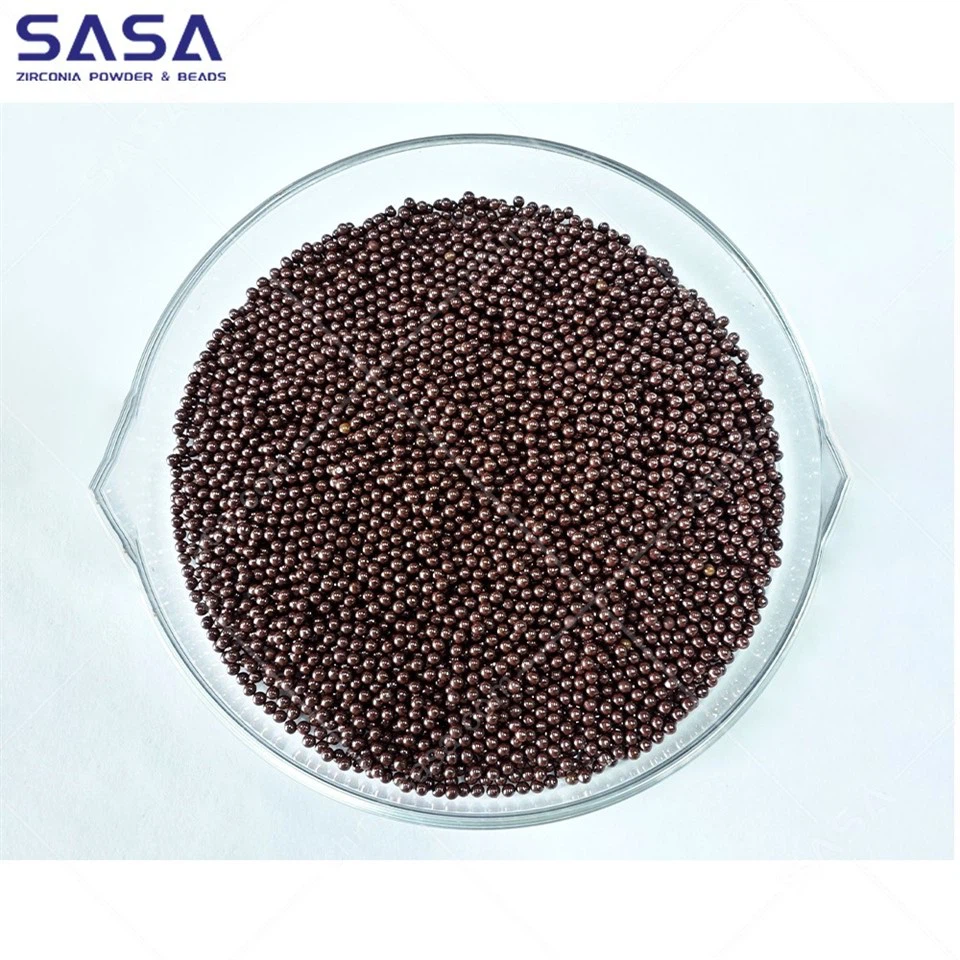
Before we discuss their use with gels, let's briefly understand what grinding beads are. Grinding beads are small, spherical particles made from different materials such as ceramics, glass, and metals. They are used in various industries for the purpose of grinding, dispersing, and homogenizing materials. The most common types of grinding beads in our product range include Cerium Stabilized Zirconia Beads and Silicon Nitride Ceramic Beads. These beads offer high hardness, wear resistance, and chemical stability, making them suitable for a wide range of applications.
The Nature of Gels
Gels are a unique class of materials that exhibit both solid-like and liquid-like properties. They are typically composed of a liquid phase dispersed within a three-dimensional network of solid particles or polymers. Gels can be found in many industries, including cosmetics, pharmaceuticals, food, and biotechnology. The properties of gels, such as their viscosity, elasticity, and thixotropy, can vary widely depending on their composition and the manufacturing process.
Feasibility of Using Grinding Beads for Gel Grinding
The short answer is yes, grinding beads can be used for grinding gels. The principle behind using grinding beads for gel grinding is similar to their use in other applications. When the grinding beads are agitated in a chamber along with the gel, they collide with the gel particles, applying shear and impact forces. These forces break down the gel structure, reducing the particle size and improving the dispersion of the components within the gel.
Advantages of Using Grinding Beads for Gel Grinding
- Efficient Particle Size Reduction: Grinding beads can effectively reduce the particle size of the gel components, leading to a more uniform and stable gel structure. This is particularly important in applications where a high degree of homogeneity is required, such as in the production of high-quality cosmetics and pharmaceuticals.
- Improved Dispersion: By breaking down the agglomerates within the gel, grinding beads help to disperse the components more evenly. This can enhance the performance of the gel, such as improving its texture, stability, and functionality.
- Versatility: Grinding beads can be used with a wide range of gel formulations, regardless of their viscosity or chemical composition. This makes them a versatile tool for gel processing in various industries.
- Scalability: The use of grinding beads can be easily scaled up or down depending on the production volume. This makes them suitable for both small-scale research and development and large-scale industrial production.
Considerations When Using Grinding Beads for Gel Grinding
- Bead Material Selection: The choice of bead material is crucial when grinding gels. Different materials have different properties, such as hardness, density, and chemical reactivity. For example, if the gel is highly acidic or alkaline, it is important to choose a bead material that is resistant to chemical corrosion. Our Cerium Stabilized Zirconia Beads are known for their excellent chemical stability and are suitable for a wide range of gel formulations.
- Bead Size Selection: The size of the grinding beads also plays an important role in gel grinding. Smaller beads are generally more effective for reducing the particle size of the gel components, but they may also increase the viscosity of the gel due to increased surface area. Larger beads, on the other hand, can provide more impact force but may not be as effective in achieving a fine particle size. The optimal bead size depends on the specific requirements of the gel and the grinding process.
- Grinding Conditions: The grinding conditions, such as the agitation speed, temperature, and grinding time, can significantly affect the quality of the gel. It is important to optimize these conditions to ensure efficient grinding without damaging the gel structure. For example, excessive agitation speed or high temperature may cause the gel to break down or lose its stability.
- Contamination Risk: When using grinding beads, there is a risk of contamination from the beads themselves or from the grinding equipment. It is important to choose high-quality beads that are free from impurities and to ensure that the grinding equipment is properly cleaned and maintained.
Case Studies
To illustrate the effectiveness of using grinding beads for gel grinding, let's look at a few case studies.

Cosmetics Industry
In the cosmetics industry, gels are commonly used in products such as moisturizers, serums, and hair gels. By using grinding beads to grind the gel components, cosmetic manufacturers can achieve a more uniform texture and better dispersion of active ingredients. For example, a company was able to improve the stability and shelf life of its moisturizing gel by using Silicon Nitride Ceramic Beads to grind the gel formulation. The beads effectively reduced the particle size of the gel components, resulting in a smoother and more homogeneous product.
Pharmaceutical Industry
In the pharmaceutical industry, gels are used for drug delivery systems, topical formulations, and oral suspensions. Grinding beads can be used to improve the dissolution rate and bioavailability of drugs in gel formulations. For instance, a pharmaceutical company used grinding beads to grind a gel-based drug formulation, which led to a significant increase in the drug's dissolution rate. This improvement in dissolution rate can enhance the therapeutic efficacy of the drug.

Conclusion
In conclusion, grinding beads can be effectively used for grinding gels. They offer several advantages, including efficient particle size reduction, improved dispersion, versatility, and scalability. However, it is important to consider factors such as bead material selection, bead size selection, grinding conditions, and contamination risk when using grinding beads for gel grinding.
If you are interested in using grinding beads for your gel grinding applications, we would be happy to discuss your specific requirements and provide you with the best solutions. Our team of experts can help you select the right bead material and size, optimize the grinding conditions, and ensure the quality and performance of your gel products. Contact us today to start a discussion about your procurement needs and explore how our grinding beads can benefit your business.
References
- "Principles of Colloid and Surface Chemistry" by Paul C. Hiemenz and Raj Rajagopalan
- "Handbook of Industrial Mixing: Science and Practice" by Edward L. Paul, Victor A. Atiemo-Obeng, and Suzanne M. Kresta
- "Cosmetic Science and Technology" by Albert M. Kligman, Howard I. Maibach, and Norman J. Lowe