

Solubility is a fundamental property that dictates how a substance interacts with solvents. When it comes to zirconia sandblasting beads, understanding their solubility in certain solvents is crucial for various industrial applications. As a trusted supplier of Zirconia Sandblasting Beads, I've seen firsthand the importance of this knowledge in optimizing the performance of these beads.
Chemical Composition of Zirconia Sandblasting Beads
Zirconia, also known as zirconium dioxide (ZrO₂), is the primary component of zirconia sandblasting beads. It is a ceramic material known for its high hardness, wear resistance, and chemical stability. These properties make zirconia sandblasting beads ideal for a wide range of applications, including surface cleaning, deburring, and shot peening.
In addition to zirconia, zirconia sandblasting beads may also contain small amounts of other elements, such as yttrium (Y), calcium (Ca), or magnesium (Mg). These elements are often added as stabilizers to improve the mechanical properties and thermal stability of the beads.
Solubility in Acidic Solvents
Acidic solvents are commonly used in industrial processes for cleaning, etching, and chemical processing. When it comes to zirconia sandblasting beads, their solubility in acidic solvents depends on several factors, including the type and concentration of the acid, the temperature, and the presence of other substances.
In general, zirconia is relatively insoluble in most common acids, such as hydrochloric acid (HCl), sulfuric acid (H₂SO₄), and nitric acid (HNO₃). This is due to the strong chemical bonds between the zirconium and oxygen atoms in the zirconia crystal structure, which make it resistant to chemical attack.
However, under certain conditions, zirconia can react with acids to form soluble zirconium salts. For example, in concentrated hydrofluoric acid (HF), zirconia can dissolve to form zirconium fluoride (ZrF₄). This reaction is highly exothermic and should be carried out with extreme caution due to the toxicity and corrosiveness of hydrofluoric acid.
Solubility in Alkaline Solvents
Alkaline solvents, such as sodium hydroxide (NaOH) and potassium hydroxide (KOH), are also commonly used in industrial processes for cleaning, degreasing, and chemical synthesis. Similar to acidic solvents, the solubility of zirconia sandblasting beads in alkaline solvents depends on several factors, including the type and concentration of the base, the temperature, and the presence of other substances.
In general, zirconia is more soluble in alkaline solvents than in acidic solvents. This is because the hydroxide ions (OH⁻) in the alkaline solution can react with the zirconia surface to form soluble zirconate salts. For example, in hot, concentrated sodium hydroxide solution, zirconia can dissolve to form sodium zirconate (Na₂ZrO₃).
The solubility of zirconia in alkaline solvents can be enhanced by increasing the temperature and the concentration of the base. However, it should be noted that the reaction between zirconia and alkaline solvents can also be slow and may require long reaction times or the use of catalysts.
Solubility in Organic Solvents
Organic solvents, such as ethanol, acetone, and toluene, are widely used in various industries for cleaning, extraction, and coating applications. When it comes to zirconia sandblasting beads, their solubility in organic solvents is generally very low.
This is because zirconia is a ceramic material with a high melting point and a strong ionic bond between the zirconium and oxygen atoms. Organic solvents are typically non-polar or weakly polar, and they do not have the ability to break the strong chemical bonds in zirconia.
However, in some cases, organic solvents can be used to disperse zirconia particles or to modify the surface properties of the beads. For example, zirconia nanoparticles can be dispersed in organic solvents to form stable colloidal suspensions, which can be used for various applications, such as coatings, catalysts, and sensors.
Importance of Solubility in Industrial Applications
Understanding the solubility of zirconia sandblasting beads in certain solvents is important for several reasons. Firstly, it can help in the selection of the appropriate solvents for cleaning and maintenance of the sandblasting equipment. For example, if the equipment is contaminated with zirconia residues, a solvent that can dissolve zirconia can be used to effectively clean the equipment.
Secondly, solubility information can be used to optimize the performance of zirconia sandblasting beads in specific applications. For example, in some chemical processing applications, it may be necessary to use solvents that can dissolve zirconia to remove the beads after the process is completed.
Finally, knowledge of solubility can also be useful in the development of new applications for zirconia sandblasting beads. For example, by modifying the surface properties of the beads using solvents, it may be possible to improve their adhesion, reactivity, or other properties.
Our Product Range
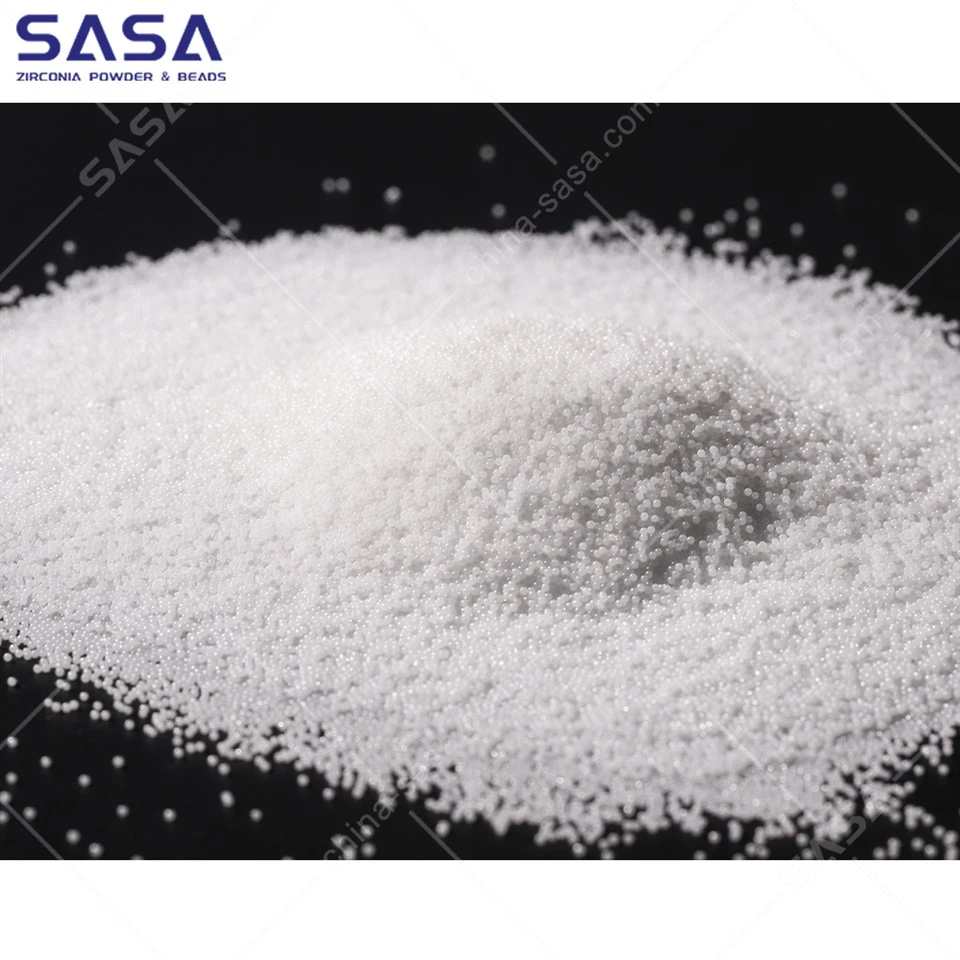
As a leading supplier of Zirconia Sandblasting Beads, we offer a wide range of high-quality products to meet the diverse needs of our customers. Our Zirconia Ceramic Sand is made from high-purity zirconia and is available in various sizes and shapes to suit different applications.
In addition to zirconia sandblasting beads, we also offer other zirconium-based products, such as Metatitanic Acid For New Energy Batteries and 55 Zirconium Silicate Powder. These products are widely used in the new energy battery, ceramics, and other industries.
Contact Us for Procurement
If you are interested in our Zirconia Sandblasting Beads or other zirconium-based products, please feel free to contact us for procurement and further discussion. Our team of experts is always ready to provide you with the best solutions and support.

References
- Smith, J. (2018). "Ceramics: Structure, Properties, and Applications." Wiley.
- Jones, A. (2019). "Chemical Principles of Materials Science." Oxford University Press.
- Brown, C. (2020). "Solubility and Chemical Equilibrium." Prentice Hall.