

Hey there! As a supplier of sand - blasting beads, I often get asked, "What's the difference between sand - blasting beads and regular sand?" Well, let's dive right in and break it down.
1. Composition
First off, let's talk about what they're made of. Regular sand is a naturally occurring granular material composed mainly of quartz and feldspar. It's been around for ages, formed by the weathering and erosion of rocks over long periods. You can find it on beaches, in deserts, and riverbeds.
On the other hand, sand - blasting beads come in various types, each with its own unique composition. For example, Zirconia Ceramic Sand is made from zirconium oxide. Zirconium oxide is a high - performance ceramic material known for its hardness and wear resistance. Then there's Zirconium Silicate Sandblasting Beads, which are made from zirconium silicate. This material combines the properties of zirconium and silicon, offering a good balance of hardness and toughness. And Zirconium Silicate Ceramic Sand is also a type of sand - blasting bead with a specific ceramic formulation based on zirconium silicate.
2. Physical Properties
Size and Shape
Regular sand has a pretty random size and shape. The grains can vary greatly in diameter, from very fine particles to larger, coarser ones. Their shapes are also irregular, often jagged and angular due to the natural processes that formed them.
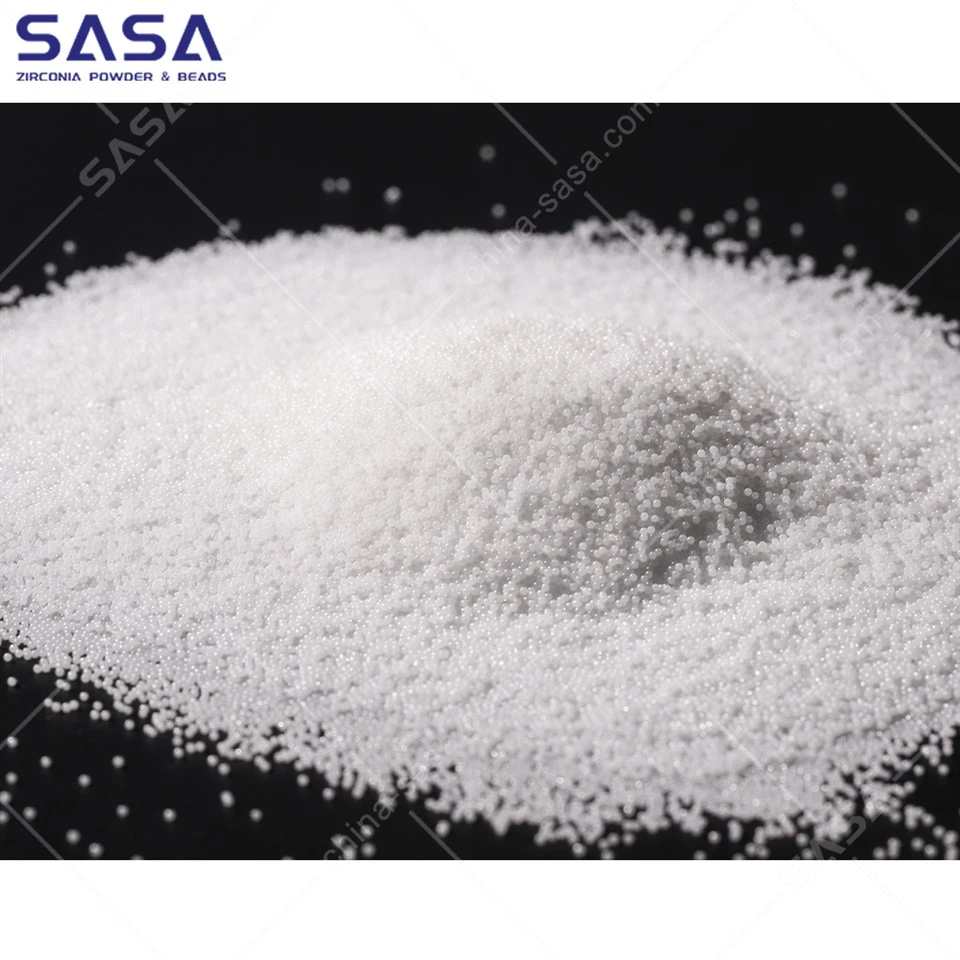
Sand - blasting beads, however, are engineered to have more uniform sizes and shapes. They are usually spherical or near - spherical, which gives them several advantages. The consistent size ensures a more predictable blasting pattern, and the spherical shape allows for better flow through the blasting equipment, reducing the chances of clogging.
Hardness
Hardness is a crucial factor in sandblasting. Regular sand typically has a Mohs hardness of around 6 - 7. While this is hard enough for some basic cleaning and surface preparation tasks, it may not be suitable for more demanding applications.
Sand - blasting beads can have much higher hardness levels. For instance, zirconia ceramic sand has a Mohs hardness of about 8 - 9, making it extremely hard and capable of removing tough contaminants, coatings, and oxides from surfaces. This high hardness also means that the beads are more resistant to wear, so they can be reused multiple times.
Density
Density affects how the blasting media behaves during the sandblasting process. Regular sand has a relatively lower density, which means it may not pack as much of a punch when hitting the surface.
Sand - blasting beads, especially those made from ceramic materials, have higher densities. The higher density allows the beads to carry more kinetic energy when propelled at high speeds, resulting in more efficient and effective sandblasting.
3. Health and Safety
Silica Dust
One of the major concerns with regular sand is the presence of silica. When regular sand is used in sandblasting, the high - pressure impact can break the sand grains, releasing silica dust into the air. Inhalation of silica dust can lead to serious health problems, such as silicosis, a lung disease that can cause coughing, shortness of breath, and even lung cancer.
Many sand - blasting beads, especially the ceramic varieties, are low in silica or silica - free. This makes them a much safer option for workers, reducing the risk of silica - related health issues.

Dust Generation
Regular sand tends to generate a large amount of dust during the sandblasting process. This not only poses a health risk but also creates a messy work environment. The dust can settle on equipment, in the air, and on nearby surfaces, requiring extensive cleanup.
Sand - blasting beads generally produce less dust. Their more uniform shape and higher density result in fewer broken particles and less airborne dust, making the work area cleaner and safer.
4. Blasting Performance
Cleaning Efficiency
When it comes to cleaning efficiency, sand - blasting beads have the edge. Their uniform size and shape, along with their high hardness and density, allow them to clean surfaces more quickly and thoroughly. They can remove rust, paint, and other contaminants in a single pass, reducing the time and effort required for the blasting job.
Regular sand may take longer to achieve the same level of cleaning, especially on stubborn surfaces. The irregular shape of the sand grains can also cause uneven cleaning, leaving some areas still contaminated.
Surface Finish
The surface finish achieved with sand - blasting beads is often more consistent and smoother. The spherical shape of the beads creates a more uniform impact on the surface, resulting in a fine, even finish. This is important for applications where a smooth surface is required, such as in the automotive and aerospace industries.
Regular sand can leave a rougher, more textured surface due to its irregular grain shape. While this may be suitable for some applications, it may not meet the requirements for others.
5. Cost
Initial Cost
In general, regular sand is much cheaper than sand - blasting beads. You can easily find large quantities of sand at a low cost, especially if you source it locally.
Sand - blasting beads, on the other hand, are more expensive upfront. The manufacturing process for ceramic beads, in particular, involves high - tech equipment and specialized materials, which drives up the cost.
Long - term Cost
However, when you consider the long - term cost, sand - blasting beads can be more cost - effective. They are more durable and can be reused multiple times, reducing the need for frequent replenishment. Their higher cleaning efficiency also means that you can complete jobs faster, saving on labor costs.
Regular sand may need to be replaced more often due to breakage and contamination, and the longer cleaning times can increase labor expenses.
Conclusion
So, there you have it! The differences between sand - blasting beads and regular sand are quite significant. While regular sand may be a budget - friendly option for some basic applications, sand - blasting beads offer many advantages in terms of performance, safety, and long - term cost.
If you're in the market for high - quality sand - blasting beads, whether it's Zirconia Ceramic Sand, Zirconium Silicate Sandblasting Beads, or Zirconium Silicate Ceramic Sand, I'm here to help. I can provide you with the right sand - blasting beads for your specific needs. Don't hesitate to reach out if you're interested in learning more or starting a procurement discussion.
References
- "Sandblasting Media: A Guide to Selection and Use" - Industrial Finishing Magazine
- "Health Risks Associated with Silica Dust in Sandblasting" - Occupational Safety and Health Administration (OSHA)
- "Ceramic Sandblasting Beads: Properties and Applications" - Journal of Materials Science and Technology