

Hey there! As a supplier of zirconium silicate powder, I often get asked about the differences between zirconium silicate powder and other silicate powders. So, I thought I'd write this blog to share some insights on this topic.
First off, let's talk a bit about what silicate powders are in general. Silicate powders are a group of materials that contain silicon, oxygen, and usually some other elements. They're used in a wide range of industries, from ceramics and glassmaking to paints and coatings. Different silicate powders have different properties, which make them suitable for different applications.
Now, let's zero in on zirconium silicate powder. Zirconium silicate, also known as zircon, has some unique characteristics that set it apart from other silicate powders.
Chemical Composition
One of the most obvious differences lies in the chemical composition. Zirconium silicate has the chemical formula ZrSiO₄. This means it contains zirconium, silicon, and oxygen in a specific ratio. Other silicate powders can have a variety of compositions. For example, calcium silicate (CaSiO₃) contains calcium, silicon, and oxygen, and magnesium silicate (Mg₂SiO₄) contains magnesium, silicon, and oxygen. The presence of zirconium in zirconium silicate gives it some special properties that other silicates don't have.

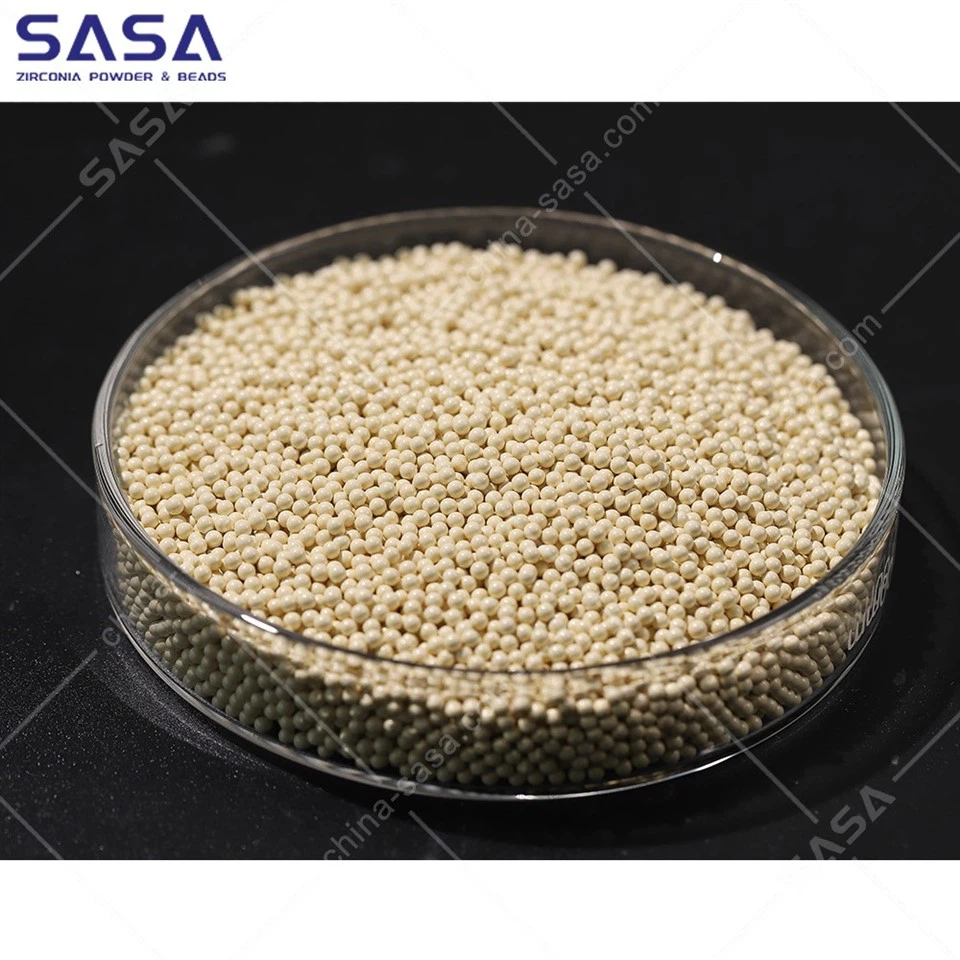
Zirconium is a transition metal with high melting point and good chemical stability. This makes zirconium silicate powder more heat - resistant compared to many other silicate powders. In applications where high - temperature resistance is crucial, like in the production of refractory ceramics, zirconium silicate is often the go - to choice.
Physical Properties
Particle Size and Shape
The particle size and shape of zirconium silicate powder can be carefully controlled during the manufacturing process. It can be produced in a relatively narrow particle - size distribution, which is beneficial for many applications. For instance, in the ceramic industry, a consistent particle size helps in achieving uniform firing and better mechanical properties of the final ceramic product.
In contrast, some other silicate powders may have a wider range of particle sizes, which can lead to inconsistent performance in certain applications. Also, the shape of zirconium silicate particles can be more regular, which can affect how they pack together and interact with other materials in a mixture.
Density
Zirconium silicate has a relatively high density compared to many other silicate powders. This high density can be an advantage in applications where weight or mass is a factor. For example, in some high - performance coatings, the high - density zirconium silicate powder can help in providing better coverage and durability.
Optical Properties
Zirconium silicate powder has excellent optical properties. It has a high refractive index, which means it can scatter and refract light effectively. This property makes it a popular choice in the production of white pigments for paints, plastics, and ceramics. When used as a pigment, it can provide a bright, opaque white color that is highly resistant to fading.
Other silicate powders may not have such high refractive indices. For example, some common silicate fillers used in plastics may have lower refractive indices, resulting in less - bright and less - opaque products.
Applications
Ceramics
In the ceramic industry, zirconium silicate powder is widely used. It can be used as a glaze opacifier, which means it makes the ceramic glaze more opaque and gives it a smooth, white appearance. It also helps in improving the hardness and chemical resistance of the ceramic glaze.
Other silicate powders are also used in ceramics, but they may have different functions. For example, kaolin, a type of aluminum silicate, is often used as a raw material for the body of the ceramic, providing plasticity during the forming process.
Paints and Coatings
As mentioned earlier, zirconium silicate's high refractive index and chemical stability make it an ideal pigment in paints and coatings. It can enhance the hiding power and durability of the paint film. Other silicate powders, such as talc (magnesium silicate), are sometimes used as fillers in paints to reduce costs and improve some physical properties like smoothness, but they don't have the same pigment - like properties as zirconium silicate.
Foundry
In the foundry industry, zirconium silicate powder is used as a molding sand additive. Its high melting point and chemical inertness make it suitable for withstanding the high temperatures and chemical reactions that occur during the casting process. Other silicate sands may not be able to withstand these harsh conditions as well.
Cost
Cost is also an important factor when comparing zirconium silicate powder with other silicate powders. Zirconium silicate is generally more expensive than some common silicate powders like calcium silicate or talc. This is mainly due to the cost of extracting and processing zirconium. However, in applications where its unique properties are essential, the higher cost is often justified by the improved performance of the final product.
If you're interested in learning more about our zirconium silicate powder, you can check out our 50 Zirconium Silicate Powder product page. We also offer 85 Zirconia Beads and Compound Zirconia Powder which have their own unique applications and advantages.
If you're in the market for high - quality zirconium silicate powder or any of our related products, don't hesitate to reach out for a purchase negotiation. We're always happy to discuss your specific needs and find the best solutions for you.
References
- Kingery, W. D., Bowen, H. K., & Uhlmann, D. R. (1976). Introduction to Ceramics. Wiley.
- Van Vlack, L. H. (1989). Elements of Materials Science and Engineering. Addison - Wesley.