

Hey there! As a supplier of Zirconia Grinding Media, I've had my fair share of conversations about how zirconia stacks up against other types of grinding media. So, I thought I'd break it down in this blog post.
Let's start by understanding what grinding media is. In simple terms, grinding media are the materials used in grinding mills to break down, mix, or disperse other materials. There are various types out there, like steel, ceramic, and glass. Each has its own set of properties, and the choice depends on the specific application.
Now, let's dive into zirconia grinding media. Zirconia, also known as zirconium dioxide (ZrO₂), is a ceramic material with some pretty impressive characteristics. One of the main advantages of zirconia grinding media is its high density. A higher density means more energy is transferred during the grinding process, which leads to more efficient grinding. This can result in shorter processing times and lower energy consumption.
When compared to steel grinding media, zirconia has a major edge in terms of wear resistance. Steel media can corrode over time, especially when used in wet grinding processes or with abrasive materials. This corrosion can contaminate the product being ground. On the other hand, zirconia is highly resistant to chemical attack and wear. It maintains its shape and size for a long time, reducing the need for frequent replacement. This not only saves money on media replacement but also minimizes the risk of product contamination.
Another benefit of zirconia is its hardness. Zirconia is one of the hardest ceramic materials available. This hardness allows it to grind even the toughest materials effectively. In contrast, glass grinding media, while relatively inexpensive, are much softer and can wear out quickly when used for grinding hard substances.
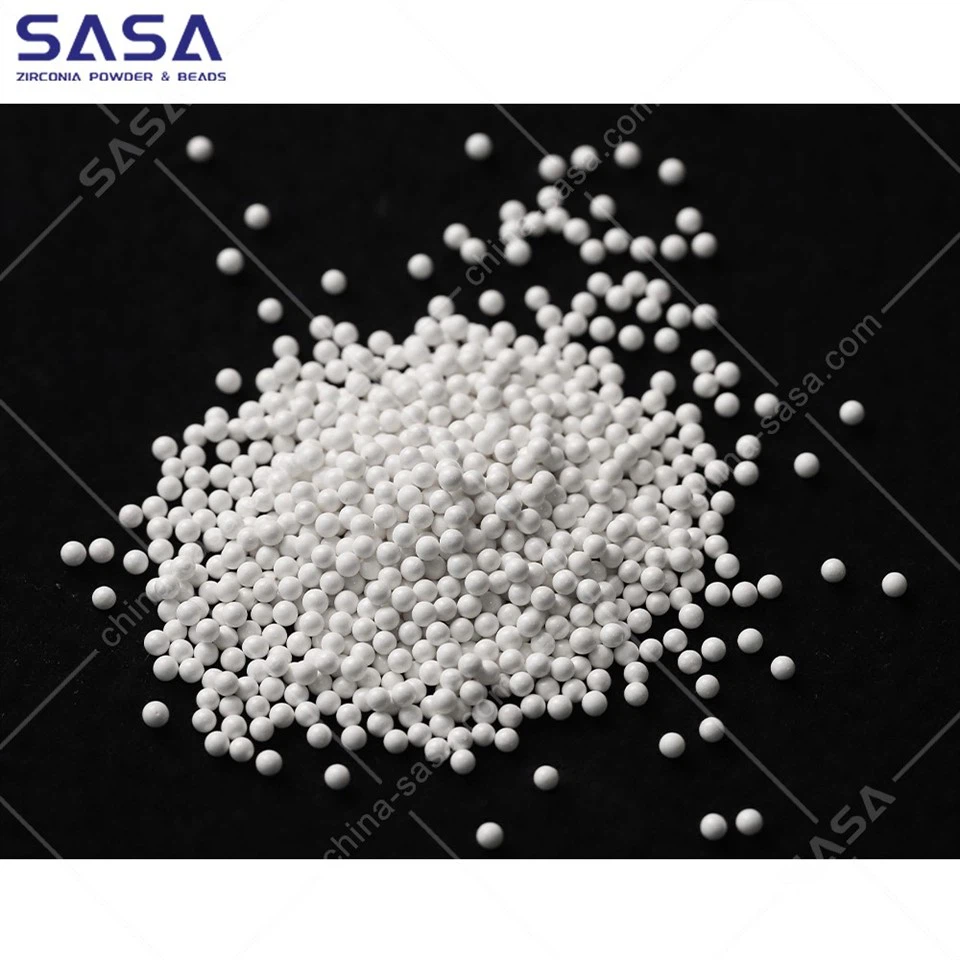
Let's talk about the shape of the grinding media. Zirconia grinding media are often available in spherical shapes. Spherical media offer several advantages. They roll smoothly during the grinding process, which helps in achieving a more uniform particle size distribution. This is crucial in many industries, such as the paint and coating industry, where a consistent particle size is necessary for a high - quality finish.
Now, let's take a look at some specific types of zirconia grinding media. For example, Zirconia Beads for Sand Mill are designed specifically for sand mills. These beads are engineered to provide efficient grinding in high - energy sand mill applications. They have excellent wear resistance and can handle high - speed operations without significant breakage.
Zirconia Grinding Media in general are versatile and can be used in a wide range of applications, from the pharmaceutical industry for grinding drugs to the electronics industry for producing fine powders. The high purity of zirconia also makes it suitable for applications where contamination is a major concern.
95 Zirconia Beads Formed By Titration are another type of zirconia grinding media. The 95% zirconia content provides a good balance between hardness, density, and cost. These beads are formed by a titration process, which results in a very uniform size and shape. This uniformity is beneficial for achieving consistent grinding results.
However, zirconia grinding media aren't without their drawbacks. One of the main disadvantages is the cost. Zirconia is more expensive than some other types of grinding media, like glass or some types of steel. But, when you consider the long - term benefits such as reduced wear, lower energy consumption, and less product contamination, the higher upfront cost can be justified.
In some cases, the high density of zirconia can also be a problem. If the equipment isn't designed to handle the weight of zirconia media, it can put extra stress on the mill and lead to mechanical issues. So, it's important to make sure your equipment is compatible with zirconia grinding media before making the switch.

In the food and beverage industry, for example, the choice of grinding media is critical. Product safety and quality are top priorities. Zirconia's resistance to wear and chemical attack makes it a great option. It ensures that there is no contamination of the food or beverage products during the grinding process.
In the cosmetics industry, the need for a fine and uniform particle size is essential for a smooth texture. Zirconia grinding media can achieve this due to their hardness and spherical shape. They can grind pigments and other ingredients to the desired fineness, resulting in high - quality cosmetics products.
In conclusion, zirconia grinding media offer many advantages over other types of grinding media. Their high density, hardness, wear resistance, and chemical stability make them a top choice for many industries. While the cost may be higher, the long - term benefits often outweigh the initial investment.
If you're in the market for high - quality grinding media and want to learn more about how zirconia can benefit your specific application, I'd love to have a chat. Whether you're looking for Zirconia Beads for Sand Mill, Zirconia Grinding Media, or 95 Zirconia Beads Formed By Titration, we can work together to find the best solution for your needs. Reach out to me, and let's start a conversation about your grinding requirements.
References
- "Ceramics in Grinding Applications" - Journal of Industrial Ceramics
- "Comparative Study of Different Grinding Media" - International Journal of Grinding Technology
- "Zirconia: Properties and Applications in Grinding" - Ceramic Engineering and Science Proceedings