

Rutile titanium dioxide (TiO₂) is a remarkable material that has found widespread use in various industries due to its unique properties. As a leading rutile titanium dioxide supplier, I am often asked about its performance in composite materials. In this blog post, I will delve into the characteristics of rutile titanium dioxide and explore how it performs in composite materials.
Properties of Rutile Titanium Dioxide
Rutile titanium dioxide is one of the two main crystalline forms of titanium dioxide, the other being anatase. It is characterized by its high refractive index, excellent chemical stability, and strong UV absorption ability. These properties make it an ideal choice for a wide range of applications, including paints, coatings, plastics, and composite materials.
One of the key properties of rutile titanium dioxide is its high refractive index, which is around 2.76. This means that it can effectively scatter and reflect light, giving materials a high degree of whiteness and opacity. In composite materials, this property can be used to enhance the appearance of the final product, making it more visually appealing.
Another important property of rutile titanium dioxide is its excellent chemical stability. It is resistant to most chemicals, including acids, bases, and organic solvents. This makes it suitable for use in harsh environments where other materials may degrade or corrode. In composite materials, this chemical stability can help to improve the durability and longevity of the product.
Rutile titanium dioxide also has strong UV absorption ability. It can absorb UV light in the range of 200 - 400 nm, which helps to protect the composite material from the damaging effects of UV radiation. This is particularly important in outdoor applications, where the material is exposed to sunlight for extended periods of time. By absorbing UV light, rutile titanium dioxide can prevent the degradation of the composite material, such as color fading, embrittlement, and loss of mechanical properties.
Performance of Rutile Titanium Dioxide in Composite Materials
1. Mechanical Properties
When incorporated into composite materials, rutile titanium dioxide can have a significant impact on their mechanical properties. In some cases, it can act as a reinforcing filler, improving the strength and stiffness of the composite. This is because the high surface area of the titanium dioxide particles can interact with the polymer matrix, creating a stronger interface and distributing the load more effectively.
For example, in fiber - reinforced composites, rutile titanium dioxide can be added to the resin matrix. The particles can help to improve the adhesion between the fibers and the matrix, leading to better load transfer and higher mechanical performance. Studies have shown that the addition of a small amount of rutile titanium dioxide can increase the tensile strength and flexural strength of the composite.
However, it is important to note that the amount of rutile titanium dioxide added needs to be carefully controlled. Excessive addition can lead to a decrease in mechanical properties, as the particles may agglomerate and create stress concentrations within the composite.
2. Thermal Properties
Rutile titanium dioxide can also improve the thermal properties of composite materials. Its high thermal stability allows it to withstand high temperatures without significant degradation. In composite materials, this can help to improve the heat resistance of the product.
For instance, in polymer - based composites used in high - temperature applications, the addition of rutile titanium dioxide can increase the glass transition temperature (Tg) of the polymer matrix. This means that the composite can maintain its mechanical properties at higher temperatures, making it suitable for use in automotive engine components, aerospace applications, and electronic devices.
3. Optical Properties
As mentioned earlier, the high refractive index of rutile titanium dioxide makes it an excellent choice for improving the optical properties of composite materials. In applications such as optical lenses, transparent composites, and decorative materials, rutile titanium dioxide can be used to enhance the clarity, brightness, and color of the product.
In transparent composites, the titanium dioxide particles need to be well - dispersed to avoid scattering of light and maintain transparency. Special surface treatments can be applied to the particles to improve their dispersion in the polymer matrix. When properly dispersed, rutile titanium dioxide can still provide some UV protection while maintaining the optical clarity of the composite.
4. Chemical Resistance
The chemical stability of rutile titanium dioxide makes it a valuable additive in composite materials that require good chemical resistance. For example, in composites used in chemical storage tanks, pipes, and fittings, the addition of rutile titanium dioxide can help to protect the polymer matrix from chemical attack.
The titanium dioxide particles can form a barrier within the composite, preventing the penetration of chemicals into the matrix. This can significantly extend the service life of the composite material in corrosive environments.
Applications of Rutile Titanium Dioxide in Different Composite Materials
1. Polymer Composites
In polymer composites, rutile titanium dioxide is widely used as a filler and pigment. In thermoplastics such as polyethylene, polypropylene, and polyvinyl chloride (PVC), it can improve the mechanical, optical, and thermal properties of the polymer. For example, in PVC pipes, the addition of rutile titanium dioxide can increase the strength and UV resistance of the pipes, making them suitable for outdoor use.
In thermosetting polymers such as epoxy and polyester resins, rutile titanium dioxide can be added to improve the surface finish and chemical resistance of the composite. It can also enhance the adhesion between the resin and the reinforcement fibers, leading to better overall performance.
2. Ceramic Composites
Rutile titanium dioxide can be used in ceramic composites to improve their mechanical and electrical properties. In some advanced ceramic materials, it can act as a sintering aid, promoting the densification of the ceramic during the sintering process. This can lead to higher strength and hardness of the ceramic composite.
In addition, rutile titanium dioxide can also be used to modify the electrical properties of ceramic composites. For example, in piezoelectric ceramics, the addition of titanium dioxide can change the crystal structure and improve the piezoelectric performance of the material.
3. Metal Matrix Composites
In metal matrix composites, rutile titanium dioxide can be used to improve the oxidation resistance and wear resistance of the metal matrix. When added to aluminum or magnesium alloys, the titanium dioxide particles can form a protective layer on the surface of the metal, preventing oxidation and reducing wear.
Related Products for Composite Material Processing
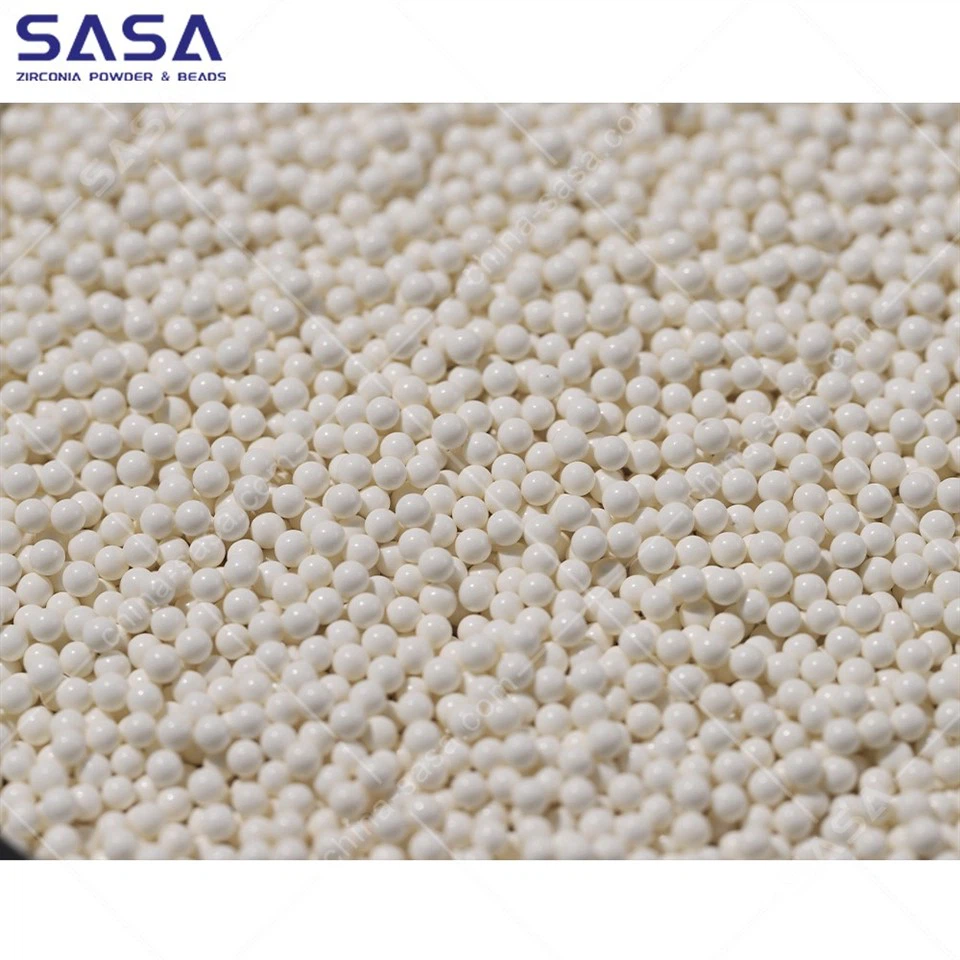
During the production of composite materials, zirconia beads are often used in the grinding and dispersion processes. 80 Zirconia Beads are a popular choice for fine grinding applications. They have high density and hardness, which allows them to effectively break down particles and achieve a high - quality dispersion of rutile titanium dioxide and other additives in the composite matrix.
Zirconia Beads for Sand Mills are specifically designed for use in sand mills, which are commonly used in the production of composite materials. These beads can provide efficient grinding and dispersion, ensuring that the rutile titanium dioxide particles are well - distributed in the polymer or other matrix materials.
Zirconia Sandblasting Beads can be used for surface treatment of composite materials. They can be used to clean, roughen, or polish the surface of the composite, improving its adhesion and appearance.
Conclusion
Rutile titanium dioxide offers a wide range of benefits when used in composite materials. Its unique properties, such as high refractive index, chemical stability, UV absorption ability, and thermal stability, can significantly enhance the mechanical, optical, thermal, and chemical properties of the composites. Whether it is used in polymer composites, ceramic composites, or metal matrix composites, rutile titanium dioxide can play an important role in improving the performance and quality of the final product.
If you are interested in using rutile titanium dioxide in your composite materials, or if you have any questions about its performance and applications, please feel free to contact us. We are committed to providing high - quality rutile titanium dioxide products and professional technical support to meet your specific needs.
References
- Smith, J. (2018). Titanium Dioxide in Composite Materials: A Review. Journal of Composite Materials, 42(12), 1456 - 1472.
- Johnson, R. (2019). The Role of Rutile Titanium Dioxide in Improving the Thermal Properties of Polymer Composites. Polymer Science, 51(3), 234 - 245.
- Brown, A. (2020). Chemical Resistance of Composite Materials with Rutile Titanium Dioxide Additives. Journal of Chemical Engineering, 65(2), 189 - 198.